
It’s no secret that local businesses should be active on social media in 2025. That said, the impact of social media on local SEO often gets swept under the rug. That’s because the connection between social media and search rankings hasn’t always been crystal clear. However, local SEO helps small business owners improve their visibility in local search results and attract more customers by making it easier for nearby consumers to discover their products or services.
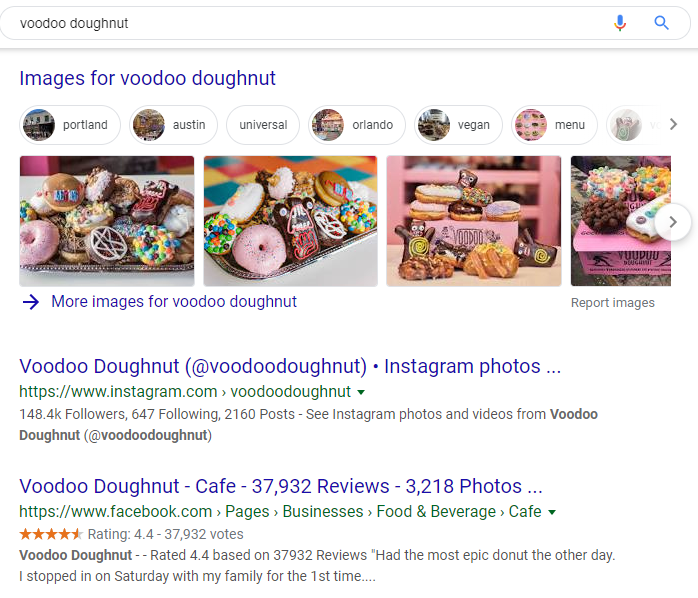
Here’s some food for thought: over half of consumers rely on social media to research products and services. Also, note that social profiles often show up on the first page of Google searches for business. Combining local SEO and social media can significantly boost your online presence. This is why local SEO is important for local businesses, as it increases both online and foot traffic by helping them appear in local searches when potential customers are looking for relevant offerings.
By integrating local SEO and social media into your marketing strategy, you can maximize your reach and engagement. Local search engine optimization focuses on improving your business’s visibility in local search results, and its SEO benefits are especially valuable for small business owners aiming to stand out in their communities.
Introduction to Local SEO and Social Media
Local SEO and social media are two pillars of a successful marketing strategy for any business looking to boost its online visibility and attract potential customers. Local SEO is all about optimizing your website and online presence to appear prominently in local search engine results pages (SERPs), making it easier for people in your area to find your business when they search for relevant products or services. Meanwhile, social media platforms offer a powerful way to build your brand, engage with your community, and drive traffic directly to your website.
When you combine local SEO with a strong social media presence, you create a marketing engine that not only helps your business show up in search engine results but also connects you with your target audience where they spend their time online. Social media can amplify your local SEO efforts by increasing brand awareness, generating buzz around your business, and encouraging more people to visit your website or physical location. By leveraging both channels, you can reach a wider audience, improve your search engine rankings, and ultimately attract more potential customers to your business.
Whether you’re a small business owner or part of a larger organization, integrating local SEO and social media into your marketing strategy is essential for standing out in local search results and driving more targeted traffic to your site. In the following sections, we’ll explore practical tips and best practices to help you make the most of these powerful tools.
Social Media for Local SEO: A Platform-by-Platform Approach
It’s advised to use social media strategically to get a better search result ranking. For starters, your social profiles need to be optimized to funnel followers directly to your website. Accurate business listings and consistent information across platforms can also enhance your local visibility in search results.
Meanwhile, social media provides endless opportunities to generate linkless backlinks. The concept is simple: any sort of link or online mention of your brand, including social mentions, is a net positive to Google. Additionally, maintaining up-to-date business listings is crucial to improve your business online presence.
Below is a platform-by-platform breakdown of how to actively use social media to improve your local search efforts. Social media platforms have become go to platforms for consumers to discover local businesses and services.
With the largest and most active user-base across social media, Facebook should be your top priority when it comes to local SEO. Note that the majority of consumers will contact a business only if they have a mobile-friendly website.
Facebook is oftentimes a supplement or full-blown replacement for traditional small business sites. The platform allows you to promote your services and accept bookings directly. It’s also a treasure trove of potential traffic and SERP appearances, given that your profile is properly optimized.
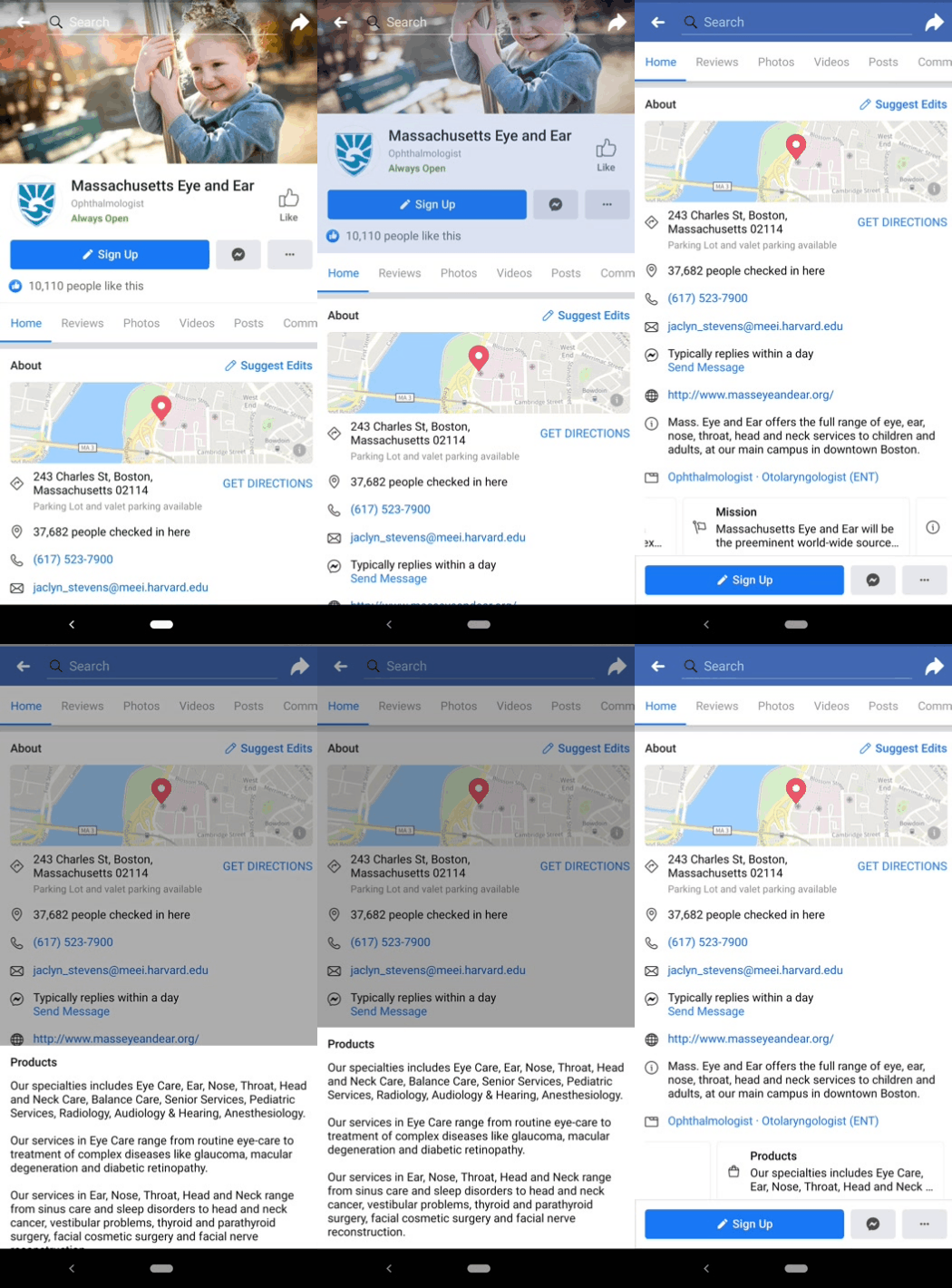
For starters, strive to fill in as much information as possible within your Page’s “About” section. Be sure to include a comprehensive business description that clearly outlines your offerings, unique selling points, and brand identity to help potential customers understand what sets you apart.
Your business details and company overview offer plenty of opportunities to not only showcase your expertise, but also target relevant industry keywords. For example, check out how Massachusetts Eye and Ear integrates service-related terms such in their “Products” tab.
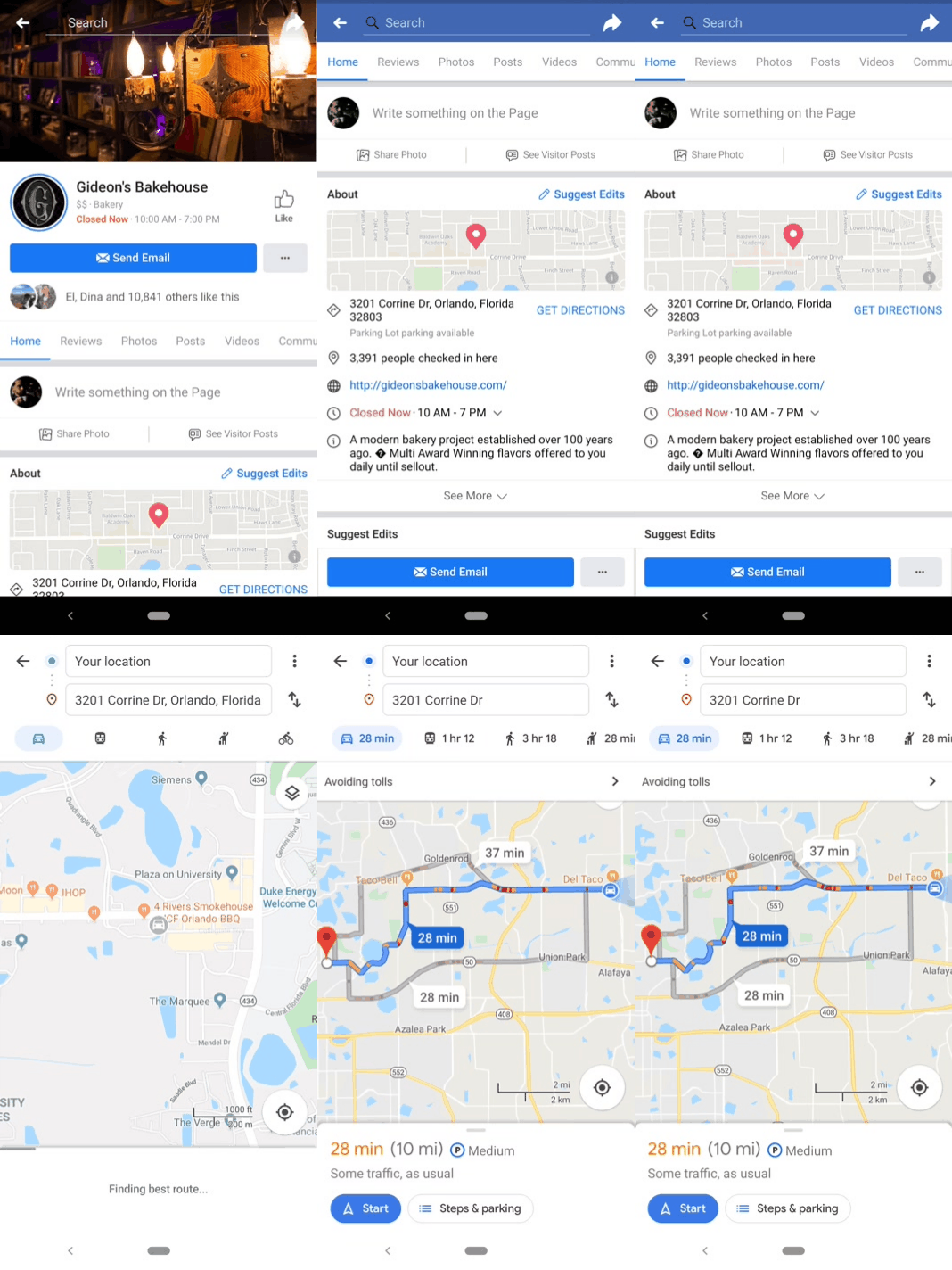
One of the most important elements to include on Facebook for local SEO is your location. Given that 86% of people look up the Google Maps locations of businesses, having your location front-and-center makes it easier for local customers to find you.
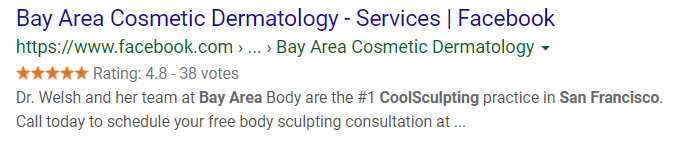
Don’t neglect additional opportunities to sprinkle relevant keywords throughout your Page by enabling Facebook’s “Services” tab. This tab allows you to highlight specific services that your business offers that those searching via Google might likewise be looking for.
In turn, those services and descriptions can pop up in Google results. For example, the Facebook Page shown above ranks for “Bay Area CoolSculpting” which is featured prominently throughout their profile.
Oh, and don’t neglect the need to curate customer reviews and ratings for your Facebook Page. These conversations represent additional opportunities for Google to crawl your Page for keywords (note: “great hotel bar” and “romantic atmosphere” in the example below). Collecting and showcasing Google reviews on your Facebook Page can further boost your credibility, improve local search rankings, and increase customer trust.
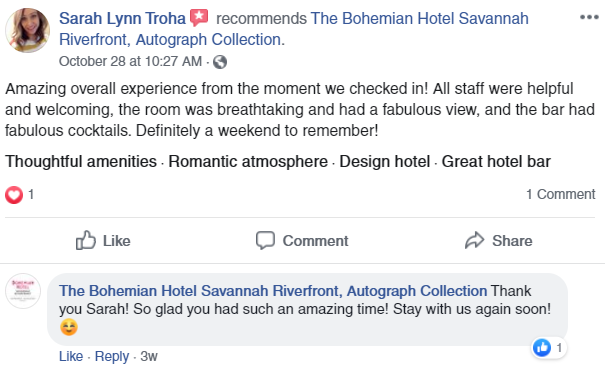
Remember that Facebook reviews and star-ratings will show up alongside your business name in a Google search. Half of the people want to see at least a four-star rating before they’ll consider a business, signaling just how important Facebook reviews are for winning over customers via search.
Beyond page setup, make a point to regularly post content that points back to your blog posts and offers on your website. These are the sort of linkless backlinks we were talking about earlier.

Another brilliant move to funnel more traffic to your site is Facebook’s call-to-action button. Simply put, this acts as a direct line from your Facebook Page to your booking platform or appointment page on-site. Make sure your Facebook Page includes an optimized website link in your profile to drive more traffic, improve engagement, and make it easy for clients to connect with your business.
In short, Facebook offers tons of opportunities to drive traffic to your site and promote relevant keywords.
Instagram can really help local businesses flourish. In fact, a staggering 90% of users follow at least one business profile. While the platform might seem limited in terms of SEO, Instagram is an underrated traffic source and can be used to boost your search presence.
Your Instagram bio is perhaps the most important piece of the puzzle. With only one link for your entire profile, it’s crucial that your bio link is sending followers to an appropriate page.
Rather than include a generic homepage link, drive traffic to a specific promotion or mobile-friendly landing page that’s tap and swipe-friendly. Also, make sure that you’re tracking link clicks and traffic from Instagram to better understand how the platform is performing for your site.
Link-shorteners and trackers such as Bitly and Rebrandly can do this for you, all the while saving valuable space within your bio. Tools like LinkTree are also useful for more accurately funneling Instagram traffic to your site based on their intent. For example, LinkTree appears like a typical URL shortener…

Here’s another tip: if your business has a physical location, encourage in-person tagging and user-generated content.
For example, Terrapin promotes their #TakeTerrapin hashtag for customers to take photos of their drinks, including at their physical brewery location. Coupled with a Google Map’s listing, this is yet another avenue for customers to land on your business through Google.
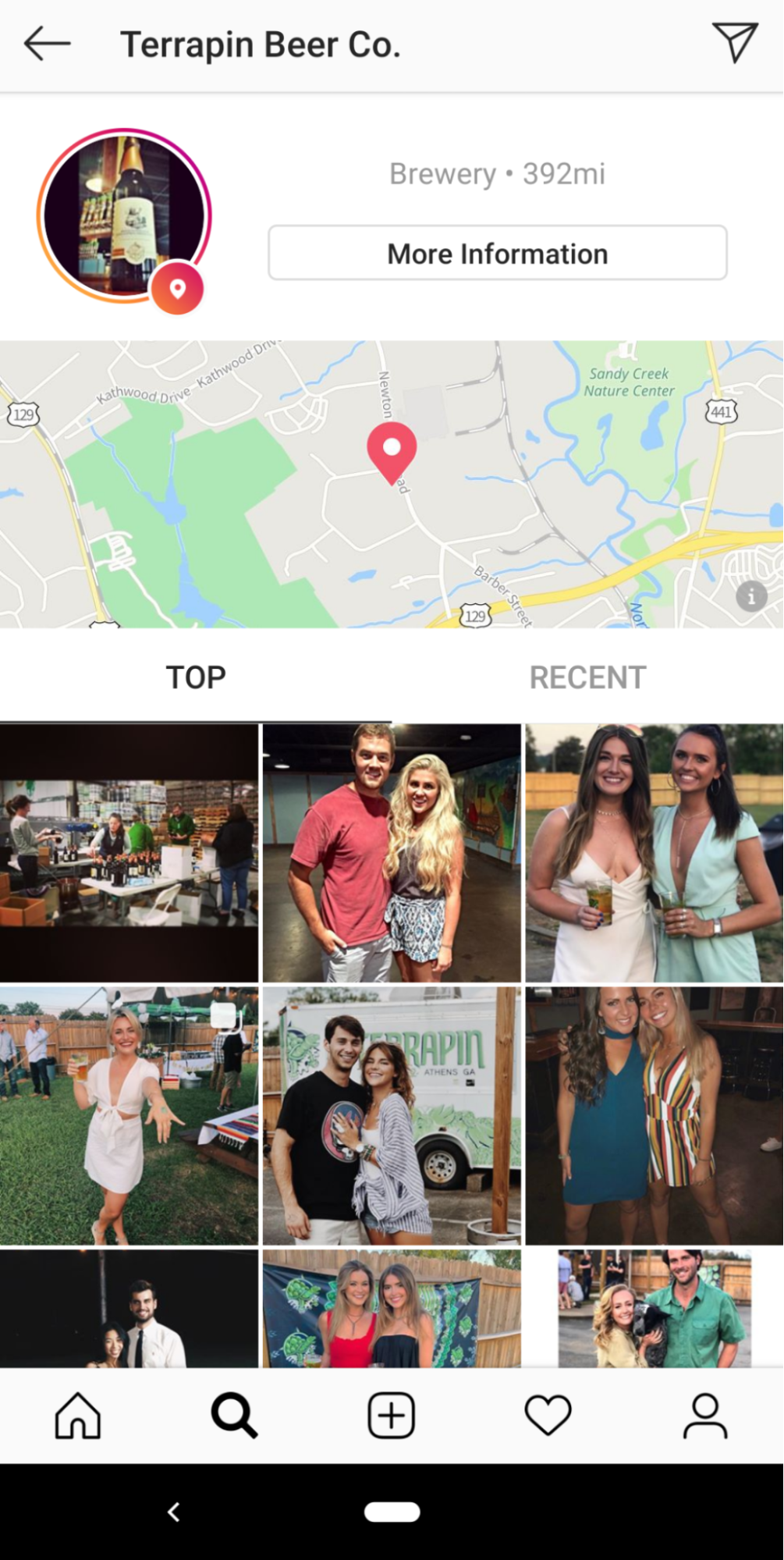
Regularly posting and encouraging tagging is key. Additionally, sharing organic posts that highlight your business’s involvement in local events can significantly increase engagement and reach within your community.
It’s also important to think about how to incorporate local hashtags in your captions. Hashtags do show up via Google searches, believe it or not. Posting about local events can help build your local presence and attract more followers from your area. We recommend that you follow these best practices for writing Instagram captions in mind.
Here’s a good example of a geo-specific caption and hashtags for reference.

There’s plenty of debate regarding what Twitter is really worth for smaller, local businesses these days.
If so, Twitter is a fantastic content distribution channel to get your links in front of customers and other industry players. Coupled with hashtags, expanding the reach of your promotions is always a good idea and Twitter can make it happen.

Similarly to Instagram, it’s best to carefully consider how you set up your Twitter bio and how that real estate can benefit your search efforts. Including your homepage, relevant keywords and hashtags related to your business is a solid starting point. Make sure to include target keywords in your bio to improve your search visibility for location-specific queries.
For example, this Portland marketing firm highlights where they’re from and the services that they offer in addition to a homepage link.

To point visitors to your latest promotions, we also recommend including a pinned tweet on your profile. Since this post sits atop your feed and is your only tweet “above the fold,” it’s a great space to grab your followers’ attention and point them to your site. Consider linking to dedicated landing pages that are optimized for high search volume local queries to attract more relevant traffic.

LinkedIn is a must-have network for anyone in the B2B space, especially considering that the platform is responsible for 80% of B2B leads.
Comparably to Facebook, there are many opportunities throughout your company details and “About” section to feature keywords that impact your search rankings.
LinkedIn allows you 2,000 words to elaborate on what your company has to offer, so make them count! Additionally, the “Specialties” field allows you to hit on specific services akin to Facebook’s “Services” tab.
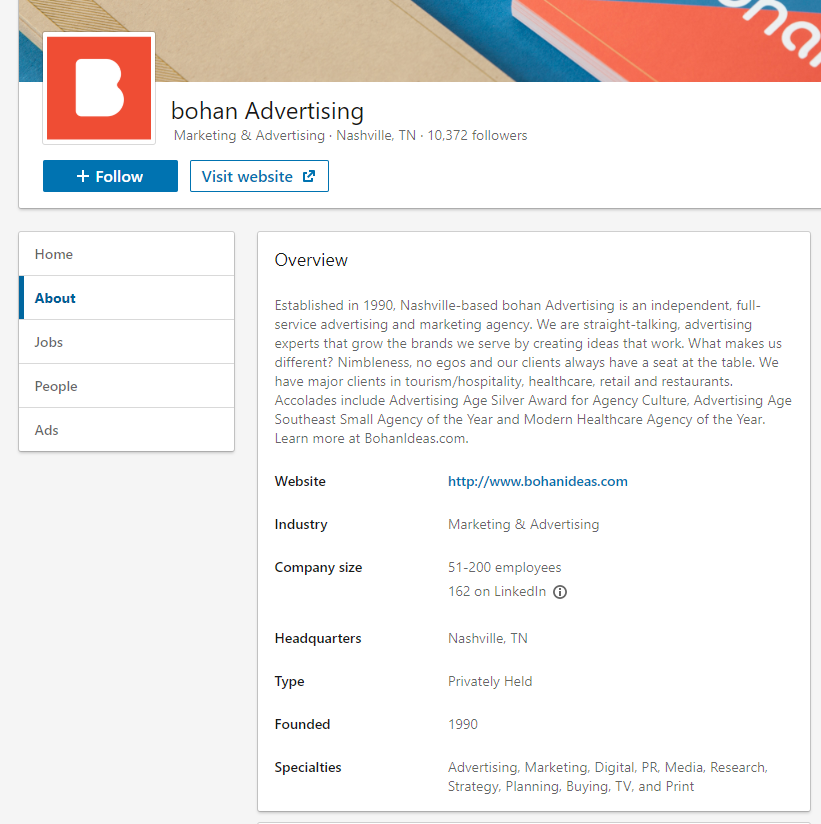
Note that these tips are fair game for B2C companies where your LinkedIn presence might be more “set and forget.” A long-form, keyword-rich “About” is better than just leaving the space blank or bare of relevant terms.
For B2B companies posting lead-generating content such as blog posts, videos or e-books, make sure that you take advantage of your employees’ presence on LinkedIn in addition to your company profile.
Sharing your website content on LinkedIn can also support your link building efforts, as it increases the chances of acquiring backlinks from relevant sources and helps improve your domain authority, which is a key SEO ranking factor.
Fact: people share promotional 24x more often from people rather than company profiles on social media. By having multiple employees share each new promotion or piece of content, you open your business up to a ton of potential traffic and reach that’s next to impossible to come by on your own.
Cross-Platform Tips for Local Social Media SEO
To wrap things up, let’s quickly dive into some general tips and best practices to consider if you’re looking to support your SEO efforts with social media. Optimizing your website content with local keywords is crucial for attracting more local traffic and improving your visibility in specific geographic areas.
When experimenting with different types of posts, remember that sharing valuable content can help drive organic traffic from social media to your website, increasing your reach and engagement.
Consistency is key—regular posting not only keeps your audience engaged but can also increase your organic traffic and help you reach more local traffic from your target area.
Mind Your Captions and Keywords
When posting on Facebook, Twitter or LinkedIn, make a point to include keywords or a call-to-action to your copy. Doing so is yet another opportunity to use keywords or provide a call-to-action to encourage clicks. Integrating local keywords into your social media posts can also improve your local search visibility and help attract more local traffic.
Dropping links by themselves won’t do you any favors for today’s social algorithms.
Additionally, optimizing meta descriptions for your shared content can improve click-through rates from search engine results pages.
Maximize the Engagement Rate of Your Posts for Better Local Search Rankings
No matter how you slice it, social algorithms can be fickle.
That’s why we recommend experimenting with different types of posts to understand what scores the most clicks and therefore more traffic to your site. For example, content strategies that increase engagement on Facebook often include interactive content (think: polls and questions) or visual (think: photos, infographics or videos).
Understanding which posts drive interactions shouldn’t be a guessing game, either. Tools such as Sotrender make a cinch to monitor your social interactions and determine the types of content that score the most engagement per network. Engagement is also one of the key ranking factors for local SEO, as higher engagement can improve your visibility in search results.
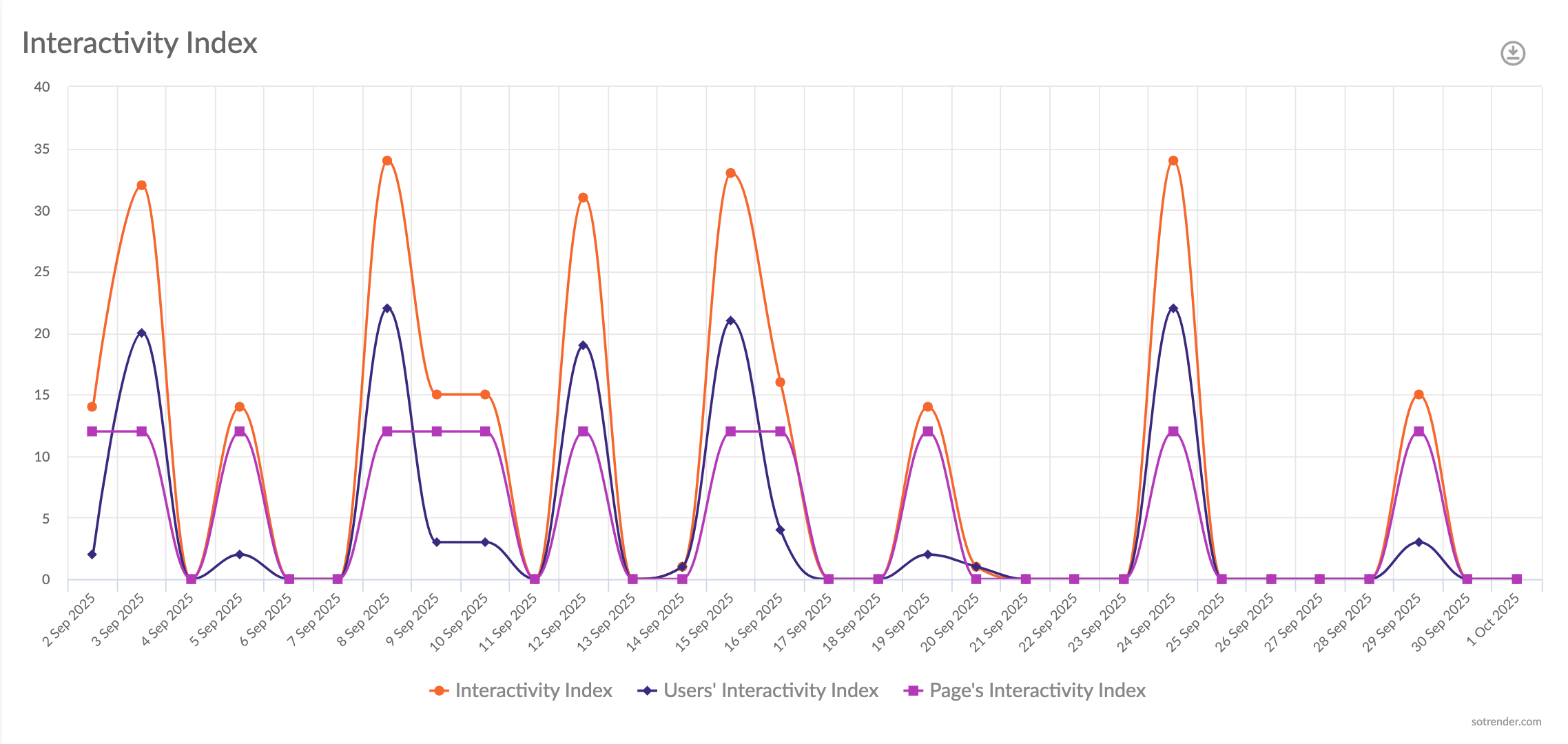
Regardless of what you’re posting, consistency does count. A business that publishes regularly and interacts with social followers is more likely to drive traffic than the business that only posts once per week. Increased engagement and visibility on social media can also lead to more foot traffic for your physical location.
Using Sotrender’s analytics metrics that are included in the tool, you can determine whether your strategy has been successful. Here are a few of the metrics provided:
- Reach (organic, paid, viral)
- Engagement (Interactivity Index, user activity and reactions, consumption, people talking about this)
- User demographics (gender, location, language)
- Top-performing content (to see which posts had the most likes, reach, or total engagement)

Monitor You Social Traffic and ROI
Finally, you need to figure out which social platforms are resulting in the most ROI for your business.
After all, your schedule and resources are limited. Businesses should spend their time wisely and on the marketing channels that make the most sense.
In other words, where is your audience more engaged? Which social channels are resulting in legitimate leads and traffic? As noted earlier, URL trackers can help keep an eye on what’s driving traffic and where your social visitors are coming from.
But robust tools like Sotrender can do you one better, breaking down individual clicks per platform alongside content performance analytics on social media.
Easy-to-read reports are prime for sharing with clients and colleagues alike to break down what’s working and what isn’t via social.
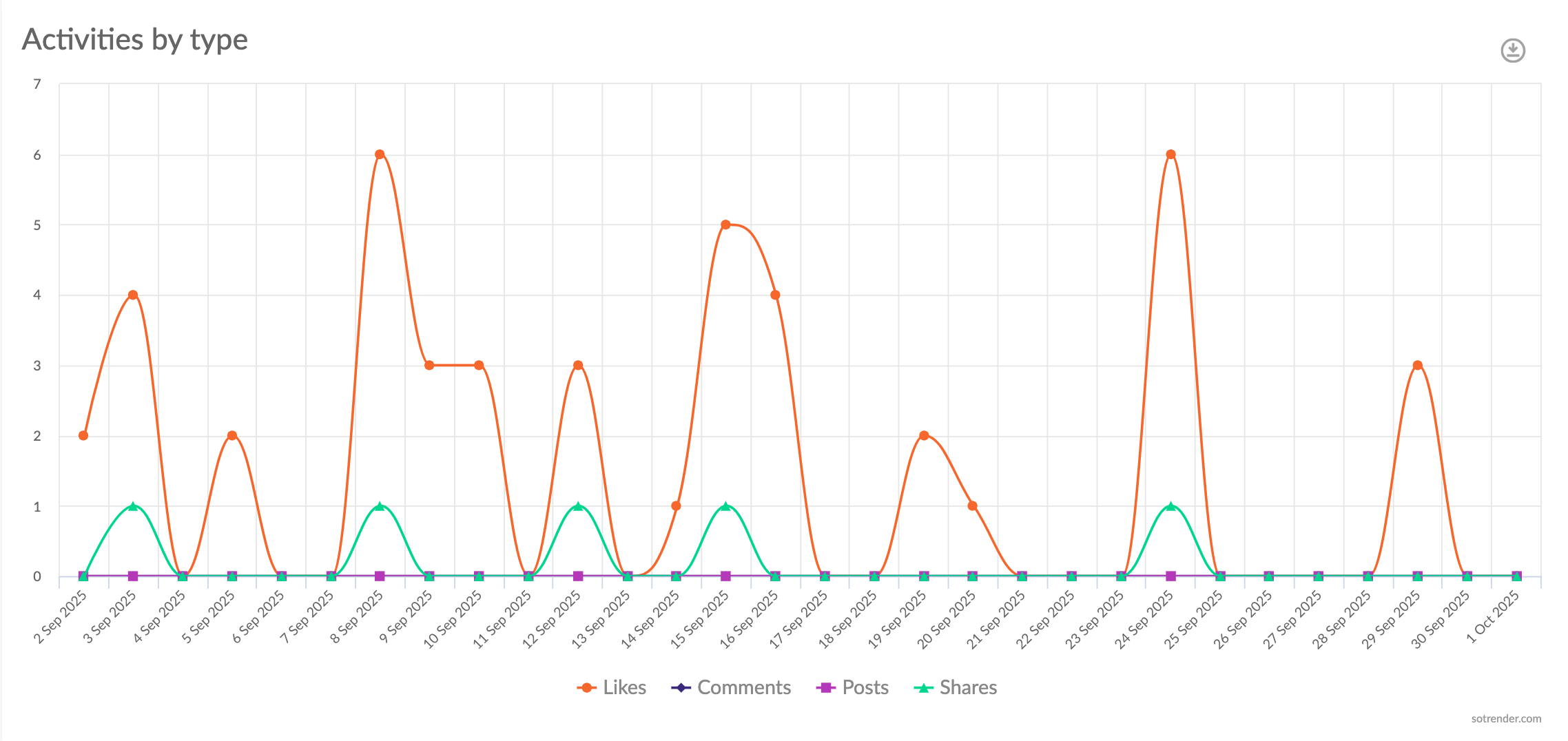
And of course, monitor social media traffic in Google Analytics. Doing so provides you a bird’s-eye view of your social traffic and how each platform stacks up. Monitoring your performance across different search engines can also help you identify new opportunities to increase your visibility and drive more organic traffic.
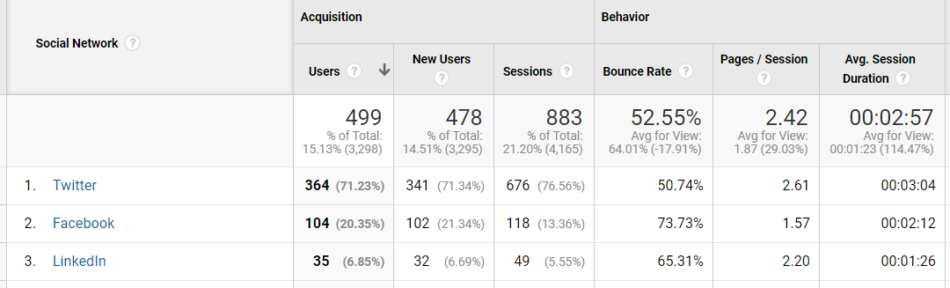
For example, you might discover that you’re getting the most traffic from Facebook but your Twitter traffic is actually clicking around and converting once they’re on-site.
Based on this data, you can determine which social channels deserve the most attention and what promotional tactics to prioritize for your business.
Is Your Social Presence and Google Business Profile Optimized for Local SEO?
Fine-tuning your social media for local SEO should be a matter of “when,” not “if.”
The tips above go hand in hand with the best practices of social media for local businesses. Although these small changes to your social presence might not seem like much, they can make a big difference they work in tandem.
After all, anything you can do to make your business more discoverable is a plus, right? Optimizing your social media profiles to appear in local search ranking results for your local area is essential for increasing visibility among nearby customers. By sticking to the principles above, you can create more opportunities for customers to find you via search and social for the long-term. These strategies can help your local business stand out and attract more customers from your community.