

You spent two hours on a TikTok. The hook is tight, the edit is sharp, the sound fits perfectly. You post it at 11am on a Wednesday and it dies at 200 views. A week later you throw up a rough clip at 6pm on a Thursday and it hits 40,000.
The content difference was minimal. The timing difference was everything.
Posting time on TikTok is not just a scheduling preference – it is one of the top three predictors of early video performance, alongside hook retention and watch completion rate. The TikTok algorithm prioritizes recency and engagement velocity, making the timing of your post critical for maximizing reach. The first 60 minutes after you post determine roughly 80% of a video’s success. TikTok tests fresh content with a small ‘test batch’ of viewers immediately after upload. Strong initial engagement and positive signals (likes, comments, shares) from this test batch are crucial for the TikTok algorithm to promote your content further. Poor early signals bury it before it ever reaches your target audience.
The “Velocity Rule” suggests posting 30 to 60 minutes before your audience’s peak activity to allow for positive signals to accumulate before most of your followers log on, increasing your chances of being boosted by the algorithm.
Understanding when to post is therefore not about gaming the system. It is about giving your content the fairest possible first test. With TikTok data, you can stop guessing and use analytics to identify the best times to post for your unique audience.
You’ll learn
- Why timing affects TikTok’s algorithm specifically
- The best times to post, broken down by day of the week
- How different industries should adjust their schedules
- What the data consensus looks like across major studies
- How to find your own best times using TikTok Analytics and Sotrender
- FAQ answers to the questions creators and brands actually ask
Why timing matters more on TikTok than other platforms
TikTok’s algorithm is distinct from Facebook’s or Instagram’s in one crucial way: it evaluates content almost entirely on early engagement signals, not on follower count or account history. When you share a video, TikTok serves it to a small test group first. If that group engages (watching it through, liking, sharing) the algorithm takes that as a signal to push it to a wider audience on the For You Page. Compared to other social media platforms, TikTok posting strategies require even more attention to timing, as the algorithm heavily prioritizes immediate engagement.
This mechanic means that posting into a window where your target audience is actively scrolling – especially during peak times or periods of peak global engagement – gives that initial test group the best possible chance of engaging. For example, peak global engagement on TikTok often occurs between 2pm and 6pm on Tuesdays, Wednesdays, and Thursdays. Additionally, content in specific niches performs better during different hours: beauty and educational content tends to do well during peak times, while comedy and gaming content may perform better during off-peak hours. Understanding audience behavior is key to optimizing engagement.
Post when they are asleep, at work, or otherwise offline and you are feeding your content to a passive or absent audience. The engagement rate tanks, the algorithm reads that as a signal of low quality, and the video stalls… regardless of how good it actually is.
The same principle applies across other outbound channels like cold email and social media platforms – timing relative to user availability often determines whether a message gets attention or ignored entirely. Timing strategies can also differ across other social media platforms, so it’s important to use platform-specific analytics and scheduling tools to maximize engagement.
Well-timed uploads averaged 31% higher first-day views compared to identical content posted in low-engagement windows, according to analysis of over 112,000 organic videos. Timing is a force multiplier on content quality, not a replacement for it.
- 7 days for free
- No credit card required
- Access to all premium features during trial
Understanding your audience
If you’ve ever posted a TikTok thinking “this one’s gonna blow up” – only to watch it get buried in the algorithm’s black hole with 12 views and your mom’s like – welcome to the club. We’ve all been there, posting at random times and wondering why our content isn’t hitting.
Here’s the thing: TikTok success isn’t about throwing spaghetti at the wall and hoping something sticks. You’ve got to do some detective work on your own followers – when are they actually online? Are they scrolling during their morning coffee, sneaking peeks during lunch breaks, or doom-scrolling before bed? And if you’ve got followers scattered across time zones, you’re basically playing engagement roulette unless you figure out where most of them actually live. This isn’t rocket science, but it’s way more specific than those generic “post at 9am” guides everyone’s sharing.
When you finally crack the code of your audience’s scrolling habits, something magical happens – your videos actually get seen by people who are ready to engage. No more posting into the void and praying to the TikTok gods. The algorithm notices when your content gets immediate love, and suddenly you’re not just reaching your existing followers – you’re getting pushed to new eyeballs too. Bottom line? Stop guessing and start watching your audience’s patterns. That’s how you turn posting from a shot in the dark into a strategic move that actually pays off.
Best times to post on TikTok: day-by-day breakdown
No single best time exists for every creator, every niche, and every audience. Audience behavior on TikTok varies significantly by day of the week, with midweek (Tuesday to Thursday) generally seeing higher engagement, while weekends can yield different patterns depending on content type and audience demographics. That said, data from multiple large-scale studies point to consistent patterns that serve as a reliable starting point.
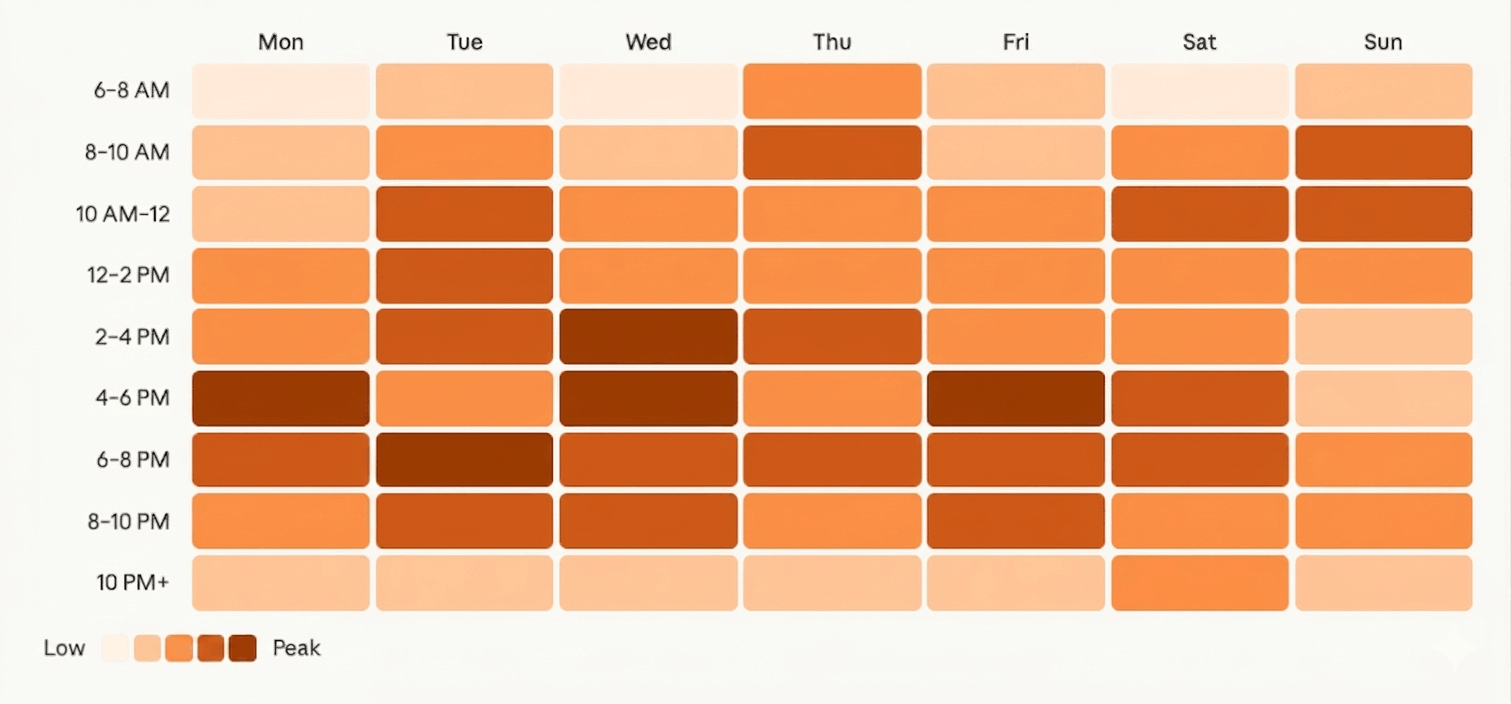
The heatmap above shows composite engagement patterns across the week. Here is what the data says day-by-day:
- Monday: The best time to post is between 3pm and 5pm, capturing users as they hit a productivity wall and seek a mental break before the end of the workday.
- Tuesday: Activity peaks around lunch hours (10am-1pm), when people scroll during short breaks between meetings. Tuesday consistently ranks among the highest-performing days across studies.
- Wednesday: Midweek fatigue drives people to the app before dinner – 4pm-6pm is the strongest time slot.
- Thursday: Morning hours are a strong window, with 7am-9am catching users before they dive into the day.
- Friday: Engagement spikes heading into the weekend – 4pm-6pm sees users winding down and scrolling more freely.
- Saturday: Steady engagement throughout the day, with 10am-7pm the broadest reliable window. Avoid posting before 7am.
- Sunday: Sunday is often the top performing day for TikTok engagement, especially in the mornings (8am-12pm), but engagement drops after 7pm as audiences prepare for the week ahead and wind down for offline routines.
The overall best times to post on TikTok are Tuesdays through Thursdays between 2pm and 6pm. Views generally peak during evening hours (6pm-11pm), with afternoons (12pm-5pm) showing the lowest engagement across most days.
Be aware of the “Dead Zone,” where engagement typically drops – this is between 1am and 5am on weekdays and after 7pm on Sundays.
One consistent finding across studies: Sunday at 8pm (a top performing day), Tuesday at 4pm, and Wednesday between 2pm and 5pm are among the top time slots for global TikTok engagement. However, there is no single best time for the entire week; instead, focus on specific time slots on certain days. Analyzing engagement data from the past seven days can help you identify trends and refine your posting schedule. While Sunday mornings are strong for engagement, weekdays are generally better for B2B and professional content. Planning your content calendar with the week ahead in mind can further optimize your results.
Best times to post by industry
Peak times and peak engagement on TikTok vary significantly by industry and niche, making it crucial to tailor your posting strategy. General posting windows are a useful baseline, but your actual best time depends heavily on what your audience does during the day, which is shaped directly by your industry and content niche. TikTok users in different niches have unique activity patterns, and understanding these behaviors is key to reaching high engagement.
- Morning posts tend to perform best for industries like hospitality, dining, and tourism. Afternoon and evening posts work better for media, entertainment, and marketing.
- For B2B and professional content, Tuesday is the best day in a business context, with Wednesday and Thursday also performing well as decision-makers are most mentally available for professional insights. Weekends should be avoided due to sharply reduced business-focused intent.
- For gaming content, Friday, Saturday, and Sunday perform best as users transition fully into entertainment mode – and late posting works because gaming audiences skew toward night activity.
- For travel and hospitality brands, the best window is Mondays through Thursdays from 4pm to 6pm, intercepting users when their desire for a weekday escape peaks.
- For fashion and beauty content, peak times are Thursday and Friday afternoons, aligning with when TikTok users in these niches are most active and seeking inspiration.
- For food and beverage content, peak engagement occurs during hunger windows, such as lunchtime and early evening, when TikTok users are searching for meal ideas.
Content posted during peak hours generally results in more likes, views, and saves, while off-peak posts tend to earn more shares and comments. Analyzing when your target TikTok users are most active helps you identify peak times for your niche, maximizing high engagement and social sharing.
For brands investing in audience insights more deeply, social listening tools help uncover when conversations spike, which often correlates with peak engagement windows on platforms like TikTok.
How posting frequency interacts with timing
Timing only pays off if your posting frequency supports it. For most brands, posting consistently and making sure to post regularly are crucial for building engagement and visibility. Waiting 3-4 hours between posts allows each video to complete its initial test phase on the For You Page without signalling spam behaviour to the algorithm. The algorithm rewards accounts that maintain consistency and regularly provide value, which can positively influence your reach and engagement.
Avoid stacking uploads within 30-60 minutes, as this splits attention and weakens early momentum. When two videos from the same account land in close succession, TikTok has to choose between them… and neither gets a clean test. The result is two underperforming posts where one well-timed post would have outperformed both.
The average brand posted on TikTok around four times per week in Q1 2025. That cadence reflects a sustainable balance between algorithmic consistency and content quality. Posting seven times a week at mediocre quality consistently underperforms posting four times a week at high quality.
When testing different posting windows, give your schedule a few weeks to accurately assess its effectiveness, as TikTok performance can fluctuate and patterns may take time to emerge.
This becomes even more visible in performance-driven models like affiliate marketing products, where overexposure without quality quickly reduces conversion efficiency.
How to find your own best posting time
General benchmarks are a starting point. Your audience’s specific behaviour, revealed through your own data and own analytics, will always produce a more accurate picture than any industry average. Here is how to find it.
- Step 1 → Switch to a Business or Creator account. TikTok Analytics is only available on these account types. The switch is free and takes under a minute in settings.
- Step 2 → Check follower activity. Inside TikTok Studio, the Followers tab shows a graph of when your specific followers are most active, broken down by day and hour. This is the single most useful data point for scheduling decisions and helps you analyze your TikTok posting times.
- Step 3 → Cross-reference with your top posts. The Content tab shows performance metrics for every video. Note the posting times of your five best-performing posts. Look for patterns – not individual data points, but recurring windows that show up across multiple high performers. Analyzing engagement data for individual posts, especially from the past seven days, helps identify trends and optimal posting times for increased engagement on TikTok.
- Step 4 → Test and measure systematically. Pick two or three time windows based on your analytics, post consistently into them for four weeks, and compare average views, completion rate, and engagement rate across each window. Replace the worst-performing window with a new one and repeat. Remember, TikTok uses batch testing – your video is initially shown to a small test batch of users to gauge performance before wider distribution. At scale, this type of iterative optimisation starts to resemble predictive systems used in industrial AI. Refining your TikTok posting schedule in this way ensures you’re always adapting to audience behavior.
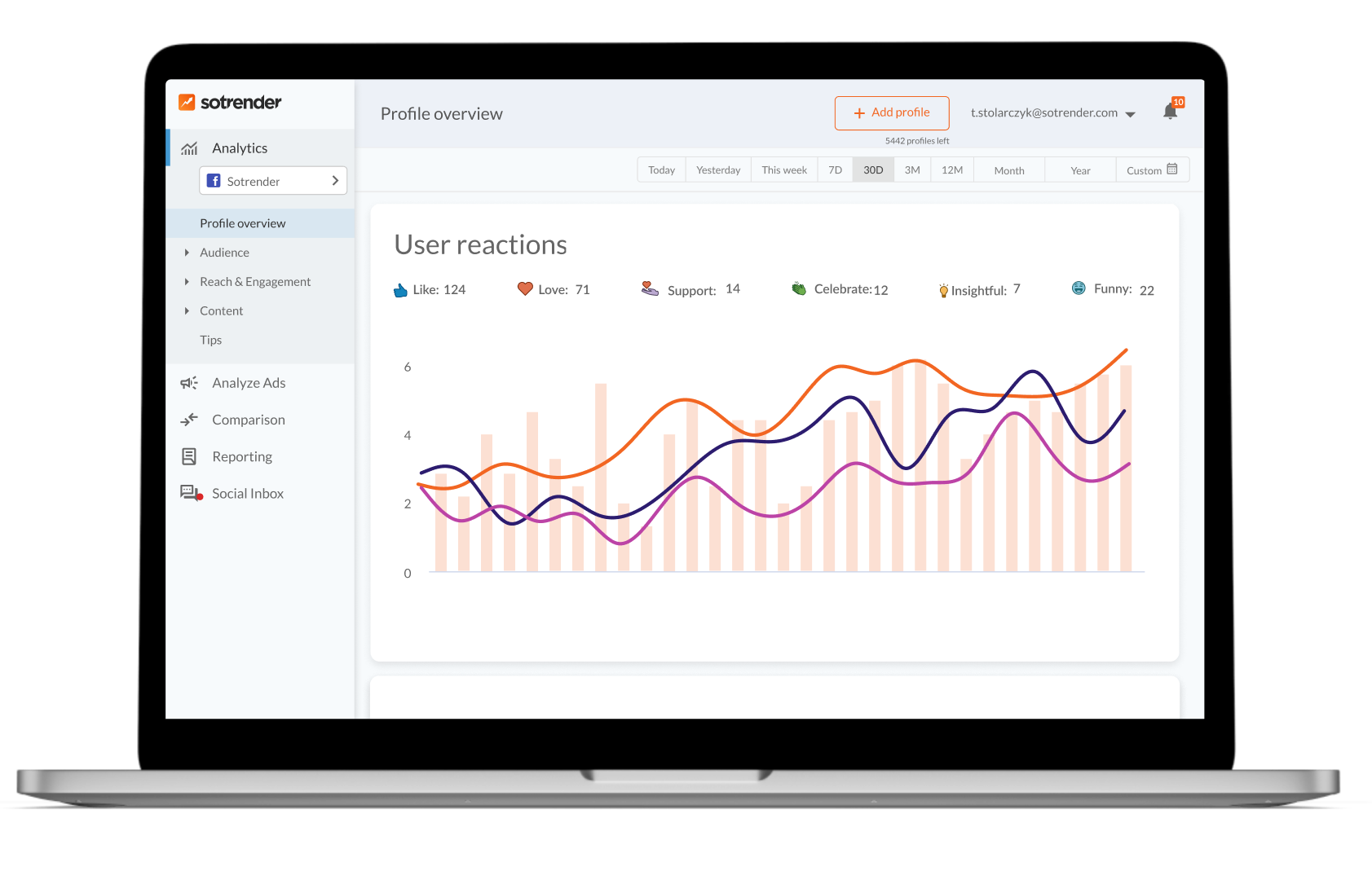
This iterative approach is where Sotrender adds solid value.
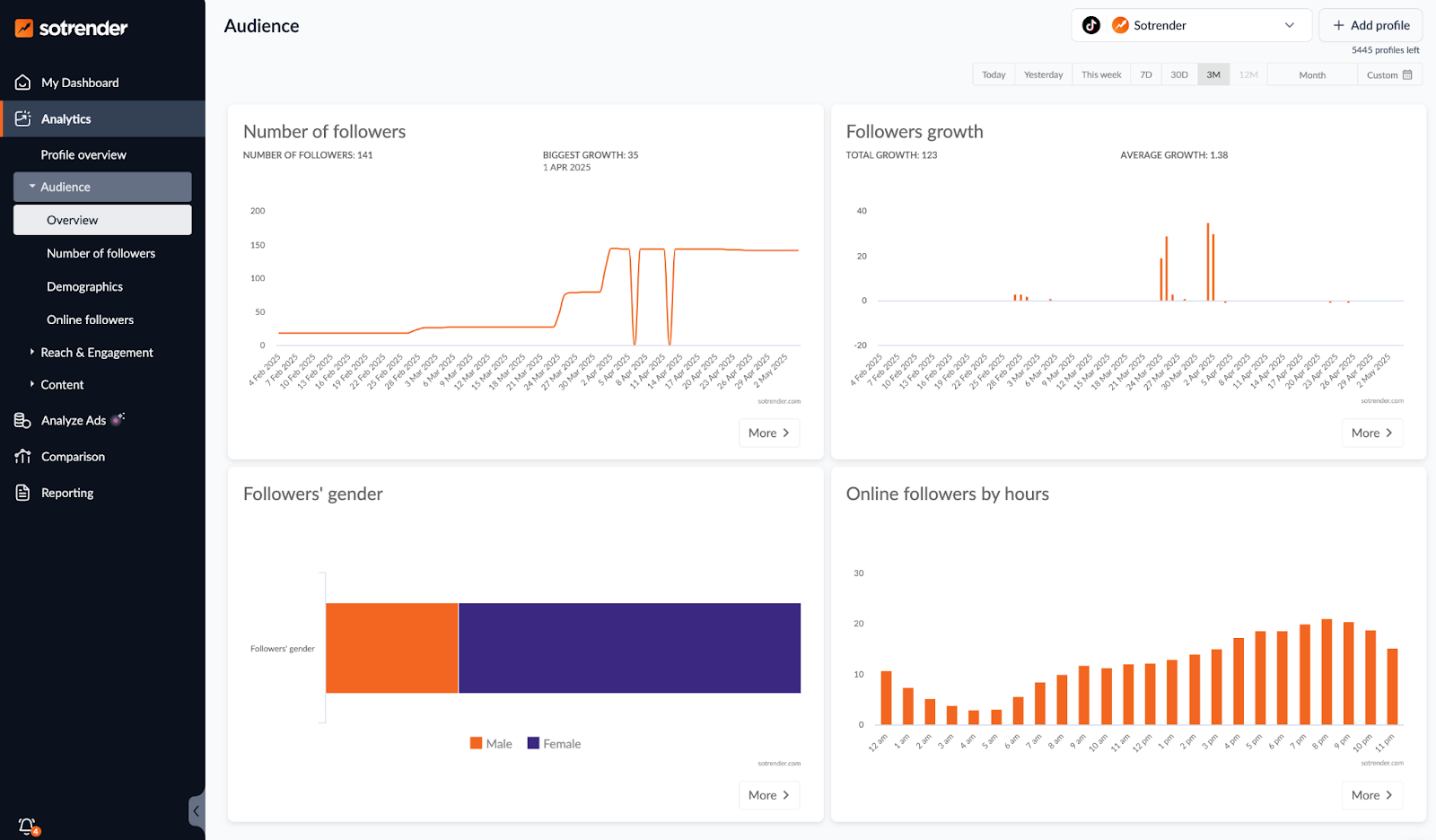
Instead of manually cross-referencing posting times against performance metrics in TikTok’s native interface (which requires toggling between tabs and building your own comparisons), Sotrender’s analytics consolidate this into a single view. Intuitive TikTok reporting shows engagement patterns, best-performing post windows, and audience activity in one place, making the four-step process above considerably faster to execute and easier to repeat monthly as your audience evolves.
Finding the best posting window is only half the battle; actually hitting it every time is what keeps your content competitive. That is where a scheduling tool becomes essential, letting you queue content in advance and align posts to peak audience hours without last-minute stress. Sotrender supports this with scheduled reporting so you can track whether your timing adjustments are actually moving performance metrics week over week, rather than relying on gut feel.
Common timing mistakes to avoid
Knowing the best times is half the picture. These are the patterns that consistently undermine posting schedules even when creators know the right windows:
- Posting at the same time every day without reviewing analytics. What worked in January may not work in March as your audience grows and shifts. Check your follower activity data monthly.
- Chasing global averages when your audience is regional. A German audience in the CET timezone has different peak hours than a US-based audience in EST. Global benchmarks skew heavily toward North American behaviour.
- Treating all content the same. A trending audio clip can gain traction at almost any time because shares drive distribution rather than follower activity. An evergreen tutorial or educational video benefits most from posting during high-intent browsing windows. The content type should inform the timing decision – remember, TikTok depends on analytics and user habits to determine the best posting strategy.
- Over-posting to compensate for underperformance. When a video underperforms, the instinct is to post again quickly. If a slot underperforms twice, replace it – but avoid stacking uploads too close together, as this splits early momentum. Use the TikTok app for scheduling and managing posts, taking advantage of features like native audio addition and notifications to help post consistently at optimal times.
Scheduling tools
If you’ve ever set your alarm for 6am to post that “perfectly timed” TikTok – only to realize your audience is probably asleep in three different time zones – welcome to the scheduling struggle. We’ve all been there, frantically posting at random hours or managing five accounts like some kind of social media circus act.
Here’s the thing about scheduling tools – they’re not just fancy timers. They let you actually hit those sweet spot hours when your audience is doom-scrolling instead of sleeping. No more setting phone alarms or that awkward moment when you forget to post and your engagement tanks. Plus, most of these tools come with analytics that show you which times actually work (spoiler: it’s probably not when you think). You’ll spot patterns like your audience loving 2pm posts but completely ignoring anything after 8pm.
Whether you’re juggling a business account, managing clients, or just trying to crack the TikTok code without losing your mind – scheduling tools aren’t just helpful, they’re essential. They keep you consistent, nail those timing sweet spots, and turn every video into a strategic move instead of a random shot in the dark.
The timezone factor
For brands and creators with international audiences, timezone management is where timing strategy gets complicated. TikTok is a global platform and your audience may be spread across several time zones even within a single country, so understanding your audience location is crucial for determining the best times to post on TikTok.
Open TikTok Analytics and go to the Followers tab to find your top territories, then check the Follower Activity section to see when those users are online.
If 60% of your audience is in one timezone, optimize for that timezone first. If your audience is in the same time zone, scheduling posts becomes more straightforward. However, if your audience is genuinely split across two major regions, identify the overlap window where both are active – even a 90-minute overlap window is worth targeting.
Businesses using timezone-optimised scheduling achieve 28% higher engagement rates compared to standardised posting times, which underscores why treating a global audience as a single timezone is a material strategic error, not just a minor inefficiency.
Key takeaways
- The first 60 minutes after posting determine roughly 80% of a video’s outcome – timing directly affects the algorithm’s initial test distribution
- Tuesday to Thursday, 2pm–7pm local time, is the most consistently supported window across major studies
- Different industries have meaningfully different peak windows – B2B skews midweek mornings, entertainment peaks evenings and weekends
- Space posts at least 3–4 hours apart to give each video a clean algorithmic test cycle
- Your follower activity data in TikTok Studio is more accurate than any industry benchmark – review it monthly
- Timezone optimisation produces 28% higher engagement for internationally distributed audiences
- Tools like Sotrender consolidate analytics across time periods, making it faster to identify, test, and validate your optimal posting windows
Over to you
The best time to post on TikTok is not a single, universal answer – it is a moving target calibrated to your audience, your niche, and your content type. Industry benchmarks are a great starting point for experimenting with TikTok posting times, but your own analytics give you the real answer. The gap between the two is where most creators leave performance on the table.
Use the general windows to start, build the habit of reviewing your data monthly, and treat every TikTok posting schedule as a hypothesis that improves with evidence rather than a fixed rule that stays the same regardless of results. Maintaining a consistent TikTok posting schedule for your TikTok account is key to maximizing engagement and reach.
Good luck!
FAQ
Does posting time matter as much as content quality?
No – and yes. Content quality determines the ceiling of a video’s potential. Posting time determines whether it gets a fair shot at reaching that ceiling. Even the best timing in the world cannot save a weak post. But strong content posted in a poor window will consistently underperform the same content posted at the right time. Both variables matter; neither replaces the other.
Is there a best time to post TikTok for brand new accounts?
New accounts lack follower data, so general benchmarks are the only starting point. Afternoons (12-6pm) are the safest bet across most days for accounts without enough analytics to identify their own peak windows. After 8-10 posts, TikTok Studio’s analytics will begin showing meaningful follower activity patterns.
How often should I check and update my posting schedule?
Monthly is the right cadence for most accounts. Audience composition and behaviour shift as accounts grow, as TikTok adds users, and as seasonal behaviour changes. A schedule calibrated in January based on your followers at that point may be meaningfully out of date by April.
Should I post at the same time every day?
Consistency is valuable for algorithmic signals, but rigid uniformity ignores your own performance data. Consistency signals reliability to both followers and the algorithm – but if your analytics show that Wednesday at 6pm consistently outperforms Wednesday at noon, adjusting makes more sense than maintaining a uniform schedule for its own sake.
How do I know if my timing is actually improving performance?
Track three metrics across each posting window over four or more weeks: average views in the first 24 hours, completion rate, and engagement rate. Engagement rate, reach, watch time, and conversions are your best indicators of whether your posting schedule is working. The same principle applies across channels – if your underlying data is inaccurate (for example, due to poor email verification), your performance insights will be misleading regardless of timing.