


Ask any agency leader what keeps them up at night in 2025, and you’ll hear the same refrain: proving that all those likes, loops, and lively comment threads actually moved a business needle.
The demand for evidence is louder than ever: 65% of marketing leaders now insist on a direct link between every social campaign and a business goal, 52% want quantifiable cost savings, and 45% are calling for clearer data visualisation. Agencies are increasingly seeking an analytics dashboard as a feature to consolidate and visualize their social media and SEO data.
That pressure is shaping the market for reporting software. The platforms that succeed aren’t just trackers of engagement. A good reporting tool aggregates and visualizes key performance indicators, providing agencies with customizable reports and dashboards to monitor performance, audience insights, and marketing campaign results. They’re storytellers-in-a-box that turn raw feeds into insights clients can act on. If you’re evaluating tools right now, these six capabilities—including key performance indicators—are non-negotiable.
White-label branding that keeps your logo front and centre
Nothing breaks the agency illusion faster than a third-party logo splashed across an otherwise polished dashboard. Clients pay for your expertise, not the mechanics under the hood, so a rock-solid white-label mode is the first feature worth checking. A white-label suite lets agencies swap colours, typefaces, and even the login domain so that every pixel, right down to the PDF footer, wears the agency’s brand.
Beyond aesthetics, branding control reinforces perception of value. When an account manager emails a performance review from a branded address and the attached slide deck matches the agency’s brand book, the client subconsciously attributes the software’s sophistication to the humans they hired. Delivering custom reports that reflect both the agency’s brand and the client’s unique metrics further demonstrates value, as these tailored insights help clients better understand performance and ROI.
Agencies that deliver fully branded work can have client retention rates as much as 42% higher than those who don’t. White-labelled portals keep tool logos off the screen, so they also lower the risk of tool-based churn: a client can’t decide to ‘just buy the software’ if they never learn what the software is called. In short, white-labelling is more than vanity; it is revenue protection and margin expansion rolled into a single setting.
- 7 days for free
- Access to all premium features
- No credit card required
Custom dashboards that surface the social media metrics that matter
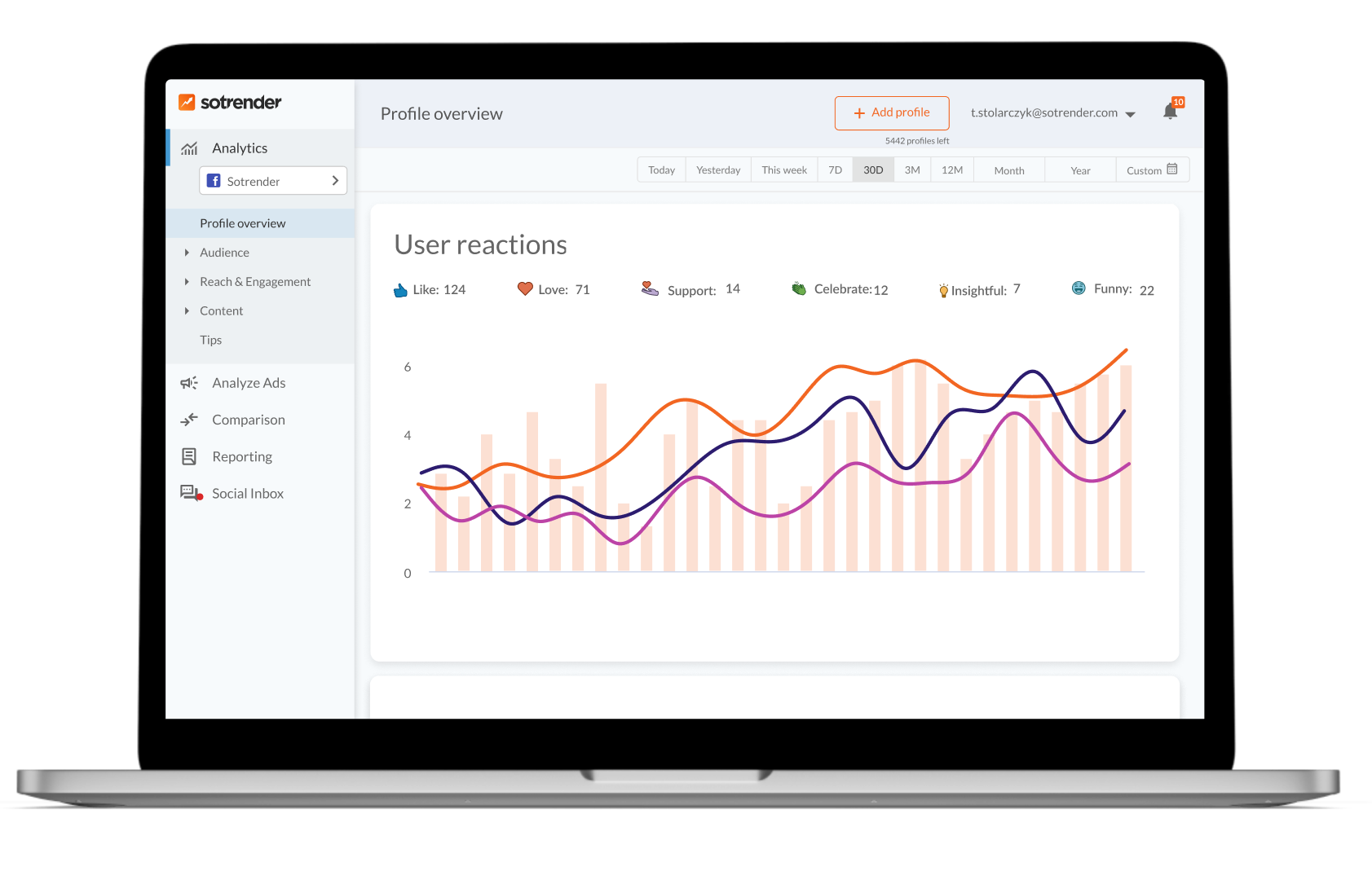
The next litmus test is flexibility. No two clients share the same definitions of success or the social commerce they’re trying to build, so a fixed template is a dead end. Some clients and campaigns can have wildly different metrics that matter, like impressions, share-of-voice, click-throughs, or sentiment, and being able to pull up that information if and when you need it is essential for keeping clients happy. An analytics platform enables agencies to perform comprehensive social media analysis, allowing them to monitor, measure, and interpret data across multiple channels for each client’s unique needs.
Why does that granularity matter? Relevance drives attention. A dashboard mirroring the exact funnel stage a stakeholder owns gets read, shared, and acted upon, especially when it uncovers key insights that drive client decisions. A generic metrics dump gets skimmed at best.
When you can spin up a bespoke view in minutes instead of hours in Excel, it not only saves labour, but it also shows strategic empathy. Clients feel seen when the first screen they open surfaces precisely the numbers they debate in internal stand-ups, and that heightened relevance translates into stickier relationships and value-based pricing.
Audience insights and engagement metrics that reveal what truly resonates
Understanding what truly resonates with your audience is the cornerstone of any successful social media strategy. The best social media analytics tools go far beyond surface-level numbers, offering agencies the deep insights needed to craft campaigns that connect and convert across multiple social media platforms.
With advanced social media analytics, agencies can unlock a wealth of valuable data about their audience demographics: such as age, location, interests, and online behaviors. These actionable insights empower teams to tailor content and messaging, ensuring every social media post is relevant and engaging for the right segments. By tracking key social media metrics like likes, comments, shares, and clicks, agencies can quickly identify which content sparks conversation and which falls flat, allowing for rapid optimization of social media efforts.
But the power of social media analytics tools doesn’t stop at engagement rates. Modern analytics platforms provide a comprehensive view of overall social media performance, including reach, impressions, and engagement rates across various social media channels. This holistic perspective helps agencies spot patterns, measure follower growth, and benchmark their results against competitors through robust competitor analysis features. With predictive analytics and social media monitoring, agencies can also identify emerging trends before they go mainstream, giving clients a competitive edge in their industry.
Automated, scheduled delivery that ends ‘report Friday’
Anyone who has ever spent a Friday evening screenshotting nine different native dashboards will appreciate the peace that comes with automated reporting. Automated reports mean never missing a deadline, and allow teams to create a deck once, set a cadence, and let the platform handle distribution forever after. Advanced reporting capabilities ensure agencies can deliver timely, accurate information to stakeholders. Reducing manual exports mitigates the copy-paste errors that erode credibility and frees up billable hours.
From a data-integrity standpoint, scheduled queries pull the freshest figures seconds before dispatch, ensuring that a late-week ad burst or a viral TikTok from Sunday night appears in Monday’s numbers. Agencies that still build reports by hand often deliver data that’s already stale by the time the PDF lands, making recommendations harder to defend.
Automated refresh cycles solve that and transform the reporting layer into a near-real-time early-warning system. In an industry where creative can go from hero to zero in a single algorithm tweak, that responsiveness is priceless. Automated reporting also supports data driven decisions for agencies and their clients.
Cross-platform aggregation with social media analytics tools so you can see the whole story at once
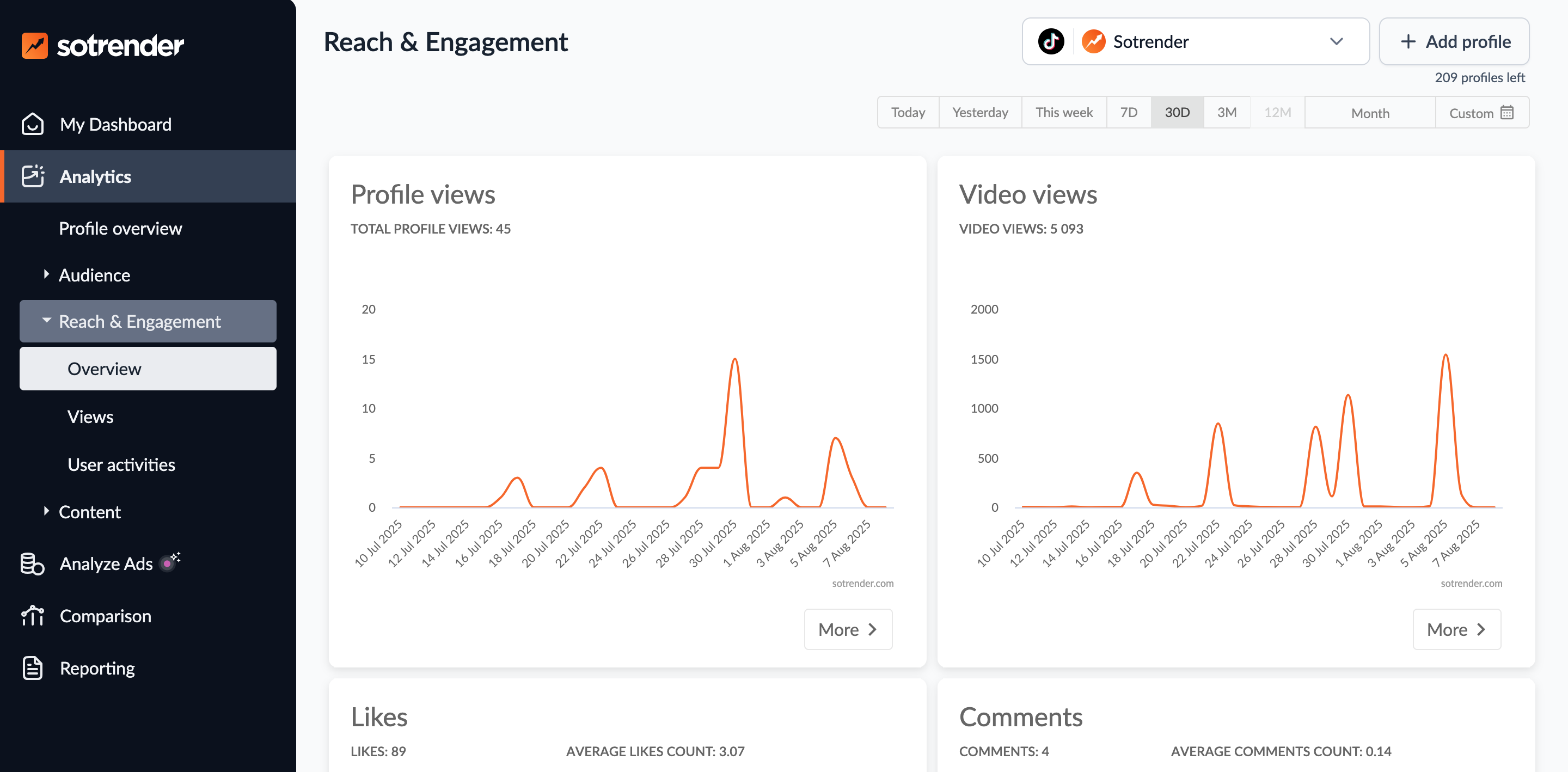
Even the sharpest insights lose impact when they’re scattered across half a dozen browser tabs. That’s why cross-channel aggregation is essential. With everything side-by-side, patterns that once hid in the noise become obvious. Aggregating data from multiple networks and various social media platforms, including all supported social media platforms, ensures you can compare performance across Facebook, Instagram, Twitter/X, Pinterest, TikTok, and more. A spike in Facebook engagement looks impressive until you notice TikTok reach collapsed the same week, suggesting creative fatigue rather than sudden success.
Unified data also accelerates troubleshooting: paid specialists can filter for ads while community managers watch sentiment, both working from the same dataset. Community management especially benefits from unified data across all social media accounts, making it easier to engage audiences and optimize strategies. A centralized platform lets an account director roll up performance across 14 regional pages in a single view, work that once took half a day of spreadsheet wrangling.
Removing the need to juggle CSV exports and pivot tables should free analysts to focus on story-crafting rather than data collection, a shift clients notice in sharper insights and quicker campaign pivots, as unified platforms help teams analyze data more efficiently.
ROI and business-impact tracking that moves the conversation beyond vanity metrics
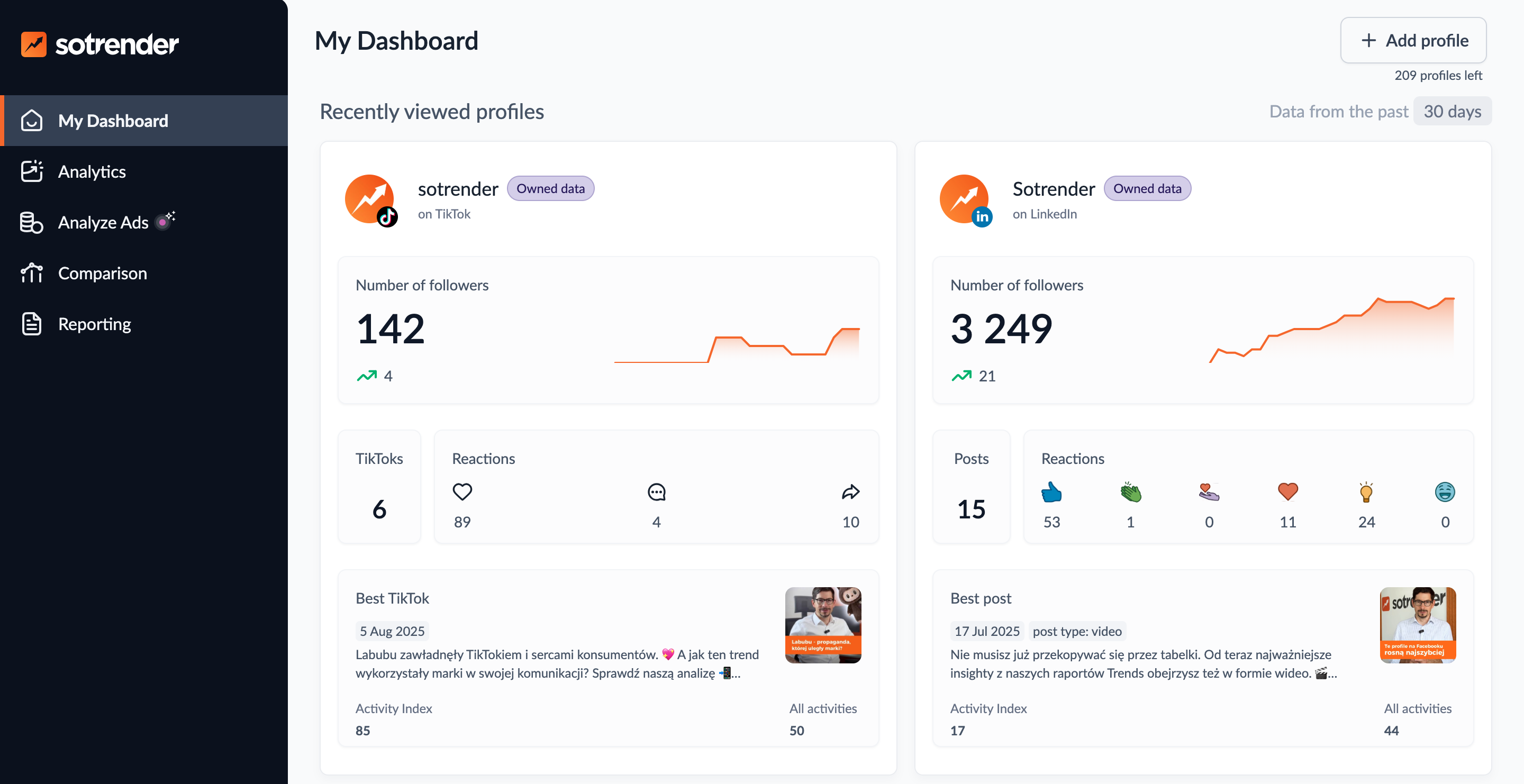
Finally, and perhaps most importantly, a reporting stack must help you prove business impact, not just social popularity. Modern suites meet those expectations by marrying social metrics to downstream events such as e-commerce check-outs or CRM deal stages. A post that didn’t appear to make much of a splash on socials tells a very different story when you can overlay sales data spikes connected to it. A marketing dashboard can integrate ad analytics and competitive benchmarking to provide a comprehensive view of social media campaigns, helping you track paid and organic performance across channels.
When those numbers appear next to impression charts in the same dashboard, the conversation with finance shifts from ‘why is this photo expensive?’ to ‘how fast can we scale?’
ROI tracking also pulls agencies out of the vanity-metric trap. Reframing performance around cost-per-lead, assisted revenue, or share-of-voice means strategists can educate clients on what really matters and make budget cuts less likely during economic slow-downs. These insights inform both social strategy and marketing strategy, ensuring that every campaign is optimized for business outcomes.
Reporting tools help agencies gain insights and deliver actionable data to clients, enabling them to make informed decisions and demonstrate the true value of their efforts.
Wrapping up: reporting that buys you time and credibility
Agencies love the creative buzz, but renewal checks are signed on the strength of the numbers. Choose a reporting platform that nails white-labelling, dashboard customization, automated delivery, cross-platform aggregation, and ROI tracking, and you’ll do more than tick boxes on a requirements sheet, you’ll buy back analyst hours, sharpen strategic recommendations, and anchor your agency as an indispensable growth partner. In 2025, that combination isn’t just a competitive edge; it’s table stakes.