

Does your brand have an established influencer marketing program, but you’re running out of ideas? The strategies you’re using are working fine, but you’re ready for something new, something outside the box. This article will provide you with creative influencer campaign ideas to refresh your approach.
Or perhaps you’re just getting started with influencer marketing, and you don’t know where to start.
Whatever the scenario, you’re in the right place.
We’ve rounded up twenty proven ways your brand can work with influencers, with examples!
We’ve got the basics in here, like your sponsored Instagram post or blog review, but we also have some definite surprises for you. These influencer campaign ideas can help your brand reach new audiences and achieve increased brand awareness. Read on and get inspired. It’s time to breathe new life into your influencer marketing strategy.
Btw: Want to take your social media performance to the next level?

Introduction to Influencer Marketing
Influencer marketing is a powerful form of digital marketing that leverages the reach and credibility of influential individuals on social media to promote products, services, or brands. By partnering with the right influencers, brands can create authentic connections with their target audience, making their marketing campaigns more relatable and engaging. The influencer marketing industry has seen explosive growth in recent years, as more brands recognize the value of influencer marketing efforts in boosting brand awareness and driving meaningful results.
Unlike traditional advertising, influencer marketing campaigns allow brands to tap into established communities and build trust through genuine recommendations. Whether your goal is to promote products, increase website traffic, or foster brand loyalty, influencer marketing can help you reach your objectives by putting your brand in front of the right audience. As part of a comprehensive digital marketing strategy, influencer marketing not only raises brand awareness but also drives conversions and long-term customer relationships.
Types of Influencers
When planning an influencer marketing campaign, it’s important to understand the different types of influencers and how they can help you reach your goals. Micro influencers typically have a smaller but highly engaged following, making them ideal for brands looking to connect with a niche audience and drive authentic engagement. Macro influencers, on the other hand, have a much larger reach and are perfect for campaigns focused on increasing brand awareness and reaching a wider audience.
Nano influencers are everyday social media users with a very small but dedicated group of followers. Their close-knit communities often trust their recommendations, making them valuable for brands targeting specific, niche audiences. Virtual influencers—computer-generated personalities—are also gaining traction, offering brands a creative and innovative way to promote their products or services in the digital space. Choosing the right influencers depends on your campaign objectives, whether you want to boost brand awareness, drive sales, or engage with a particular community.
Finding Influencers
Finding the right influencers is a critical step in launching successful influencer marketing campaigns. Brands can use influencer discovery tools to search for influencers who align with their target audience, brand values, and marketing goals. These tools allow you to filter potential partners by niche, audience demographics, and engagement rates, ensuring you connect with influencers who can deliver real impact.
Social media listening tools are also valuable for identifying influencers who are already talking about your brand or industry, making it easier to find genuine advocates. Attending influencer marketing events and conferences can help you network with influencers and gain deeper insights into their content and audience. By investing time in research and using the right tools, brands can find influencers who are a perfect fit for their marketing campaigns, maximizing the chances of reaching and resonating with their niche audience.
Creating an Influencer Marketing Strategy
A well-crafted influencer marketing strategy is essential for achieving your campaign goals. Start by clearly defining what you want to accomplish—whether it’s increasing brand awareness, driving sales, or growing your social media following. Next, identify your target audience and use influencer discovery tools to find influencers whose followers match your ideal customer profile.
Decide on the type of influencer content that will best showcase your brand, such as sponsored social media posts, product reviews, or creative collaborations. Set a realistic budget for your influencer marketing campaign and outline how you’ll measure success, using metrics like engagement rates, website traffic, and conversions. By taking a strategic approach and aligning your influencer marketing efforts with your overall social media strategy, you can create campaigns that deliver measurable results and meaningful brand engagement.
Top 20 Influencer Marketing Ideas
1. Social media shoutouts
This is the classic influencer post, so we’ll start here. Send influencers free samples, along with a few highlights about your brand and how you can help their fans. Then let them create a sponsored post that tells everyone how awesome you are.
Rover.com is an online marketplace for pet-sitters. They partnered with Instagrammers who love their dogs to spread the word about how used their service made them feel good as a pet-owner.
Sponsored posts like this racked up nearly 1.5K likes:

2. Blog post reviews
The blog post review is another classic influencer marketing gem, and for a good reason: it works!
In-depth posts about your brand give influencer’s subscribers all the information they need to make them convert, packaged up in a post written by an influencer they respect and admire. These blog reviews also serve as valuable website content for both the influencer and the brand.
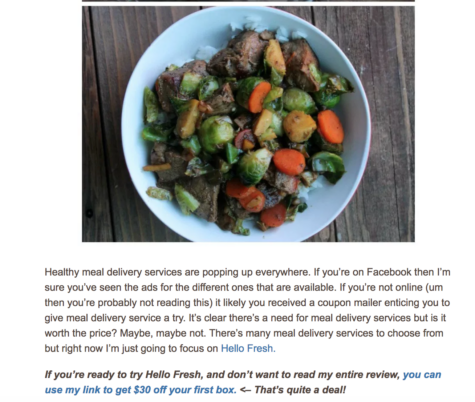
Meal kit delivery service, Hello Fresh, partnered up with food bloggers to promote their meals as healthy and delicious. Food bloggers have impressed their fans with the knowledge of cooking, meal prep, and more.
An endorsement from them tells fans that they believe this meal service is just as good as any of their home-cooked meals.
In this review of Hello Fresh, the blogger strategically includes a TL;DR CTA for her readers right at the top, so they can enjoy a discount on their first order:
3. Sponsored YouTube videos
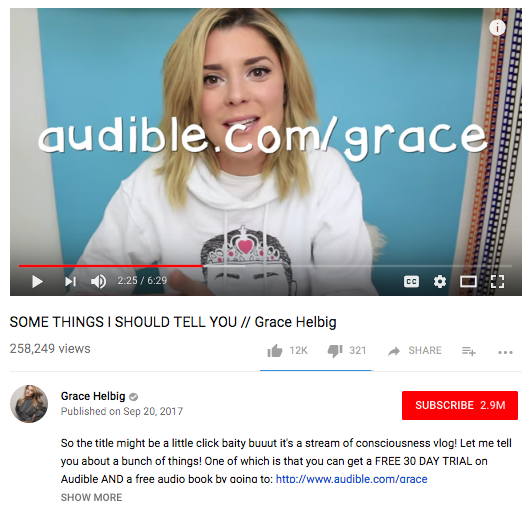
Audiobook company Audible has made itself known by sponsoring podcasts (another listening entertainment medium) and social media influencers like YouTuber Grace Helbig. Brands leverage the influencer’s reach on YouTube to connect with a larger audience.
As an author herself, the sponsorship is a natural fit.
Request that influencers don’t just shoehorn your brand mention in. Ideally, your brand should make sense within the context of the post.
For example, Grace created videos where Audible’s audiobooks offered a real value-add for viewers, such as:
- “Things I Should Tell You”
- “Travel Tips”
- and “How to Handle Conventions.”
4. Branded hashtags
Want your dedicated hashtag to go viral?
Then work with influencers to promote your hashtag and your brand account. Branded hashtags promoted by influencers can generate buzz for your brand, creating excitement and attention that encourages more people to join in.
Luxury watch brand Daniel Wellington drummed up an army of fashion and lifestyle influencers. In just a few years, their branded hashtag #danielwellington racked up nearly 2 million Instagram posts.
That’s just from working with influencers.
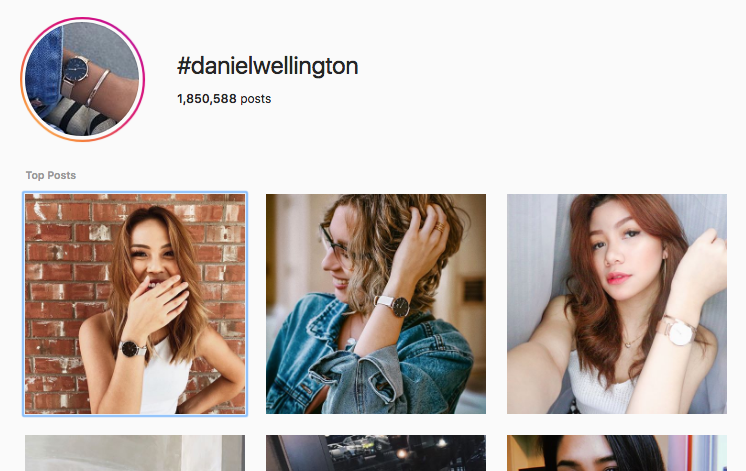
After seeing an influencer use your hashtag, fans are not only more likely to purchase from you, but they’re also more likely to post using the hashtag themselves.
In one year, Daniel Wellington enjoyed a 214% increase in profits and more than doubled their follower counts.
5. Live video and events
When you invite influencers to your live events, amplify your efforts by filming part of the event for your social media. These types of events with influencers can significantly boost brand visibility.
This way your fans who can’t make it still get to feel like VIPs.
Starbucks held an event to encourage people to vote in the 2016 election.
The event was orchestrated to position the brand in a positive light, but people don’t necessarily care about the excellent work your brand is doing.
But if you invite a celebrity or two, though, they just might.
By partnering with CommonStarbucks managed to drive nearly 200K views for the video.
6. Social media takeovers
Let’s face it: seeing the same content over and over from your brand gets boring. Even if you switch it up, your voice will still sound the same.
Surprise and delight your followers with an influencer takeover.
Have an influencer manage your account for the day, posting live videos and sharing stories. This allows the influencer to bring their personal brand to your audience, creating fresh and engaging content. Fans will appreciate this “extra” time and content from the influencer that they would not have received by following the influencer’s account alone.
Plus, they know they have to keep following your account if they never want to miss content from the high-profile influencers you’re working with.
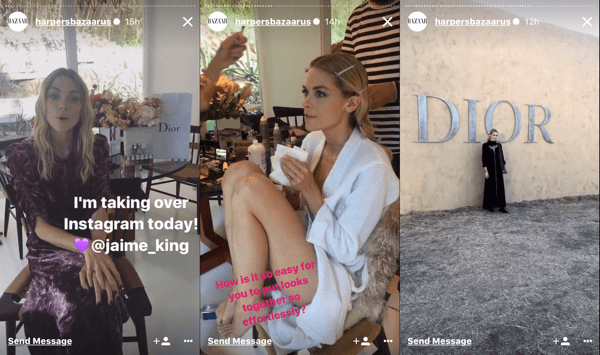
Harper’s Bazaar mixed up their coverage of fashion shows by having model Jaime King show herself preparing for the Dior Cruise show:
7. Promo codes
If it’s conversions you want, try this: Along with a free sample of your product, let influencers pass the love onto fans with an exclusive promo code.
DevaCurl sponsored @spisha, an Instagram micro-influencer known for her gorgeous hair and style.
The promo code was for a gift – just like the one she’s showing off in her post. The brand smartly used her Instagram handle as the promo code, so it was easy for fans to remember.
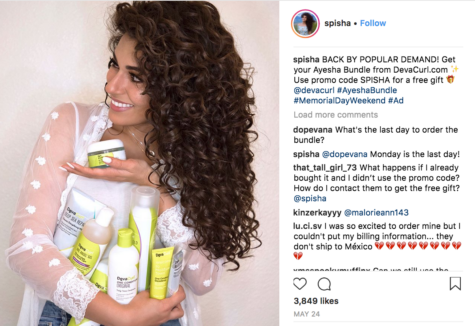
Influencers love to offer their followers unique discount codes. These codes are especially effective when shared with followers who are genuinely interested in the influencer’s recommendations.
8. Social Ads
Use the authenticity of influencer marketing to engage fans; then extend your reach with your ad dollars. Platforms like Facebook now let brands boost their influencer’s post as an ad:
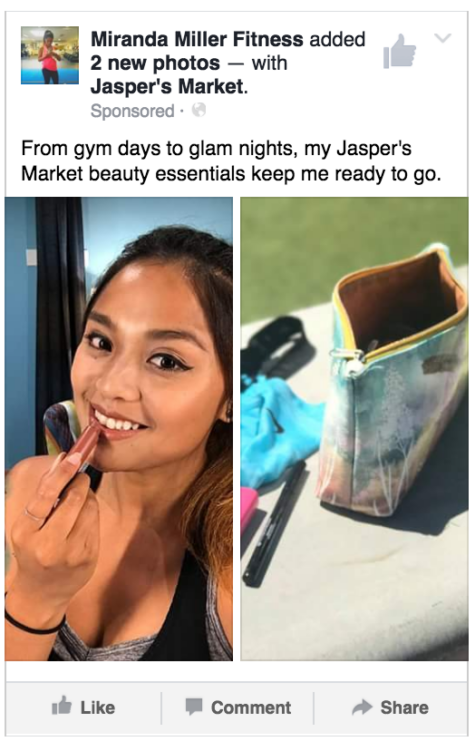
Even though these posts receive the same “Sponsored” text as a regular ad, they look less like ads to users, since the poster’s name and photo are clearly from a person, rather than a brand. Plus, the “with [brand name]” text looks like a regular friend mention on Facebook. Running influencer ads across multiple platforms can further expand your campaign’s reach and ensure brand consistency throughout various digital channels.
9. Brand testimonials
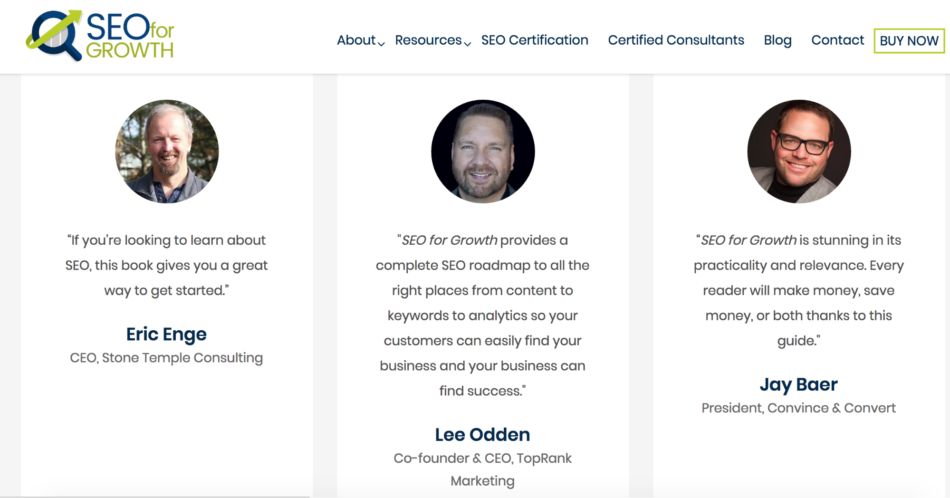
Featuring influencers on your website impresses customers. Highlighting them on your landing pages converts them.
Let your influential customers do the selling for you as software company SEO for Growth did. Their homepage features a long list of testimonials. They took care to include testimonials from a variety of well-known experts their target customers look up to, such as the SEO gurus behind publications and research firms like Stone Temple Consulting, Convince & Convert, and Search Engine Journal. Showcasing influencer testimonials can also strengthen your brand reputation by building trust and credibility with your audience.
10. Exclusive interviews
Fans are always excited to hear from their favorite influencer, but they’re not always thrilled to hear about your brand. Turn that around by interviewing individual influencers on your brand account—featuring individual influencers creates unique and engaging content that resonates with their followers.
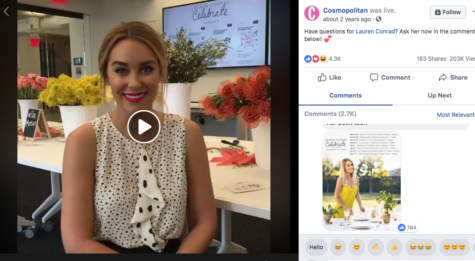
When Cosmopolitan Magazine interviewed celebrity influencer Lauren Conrad on Facebook Live, their fans could have their questions answered by Lauren.
That kind of personal connection is thrilling for fans, as demonstrated by the 203K views this video enjoyed.
11. Fan meetups
What’s better than a live interview on social media?
Allowing your fans to meet their influencer in-person, for free.
GoPro partnered with Insta-dog Loki the Wolfdog and his owner. When GoPro sponsored a fan meetup for Loki, fans responded to the tune of nearly 90K likes!
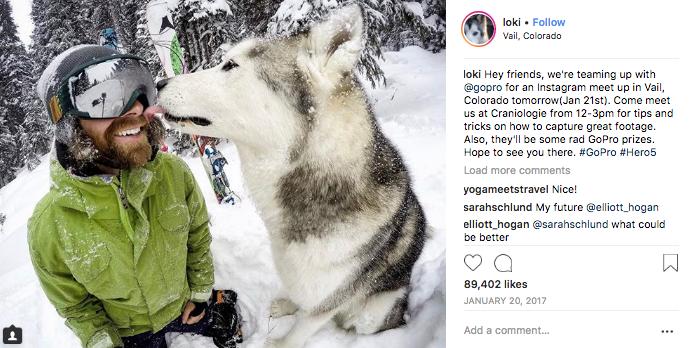
Helping fans connect to their influencers endears them to your brand. You’re not just pushing products; you’re bringing people together. Fan meetups also help brands connect with niche communities in a meaningful way, fostering authentic relationships and targeted engagement.
12. Roundup posts or videos
Many brands feature influencers in roundup posts on their site (think posts like “Top Beauty Influencers Share Their Favorite Skin-Care Tips”), but influencers can do their roundups featuring your brand.
Encourage influencers to feature your brand alongside complementary products, rather than competitors. For example, instead of featuring competing skincare products, an influencer might do a post writing about her morning routine, which includes one skincare product, a hair-care product, cosmetics, and her favorite breakfast smoothie.
We know from talking to our influencers that they love doing round-up articles and videos like gift-guides or top 10 product recommendations, which feature multiple brands for a single topic.
We offer a specific feature which enables our influencers to partner with multiple brands and includes them in a single roundup post.
Readers gravitate towards these posts because they cover a broader topic than a review of a single product. Featuring multiple influencers in a single roundup can provide diverse perspectives and increase engagement.
13. Ambassador program
Influencers reflect on your brand, primarily if you work with them over an extended period. Grow your brand organically by turning trusted influencers into ambassadors. Ambassador programs are built on strong influencer partnerships that benefit both the brand and the influencer, fostering authentic, engaging content and boosting brand visibility.
Lululemon’s ambassador program includes a wide range of influencers, ranging from celebrity athletes to local influencers like yogis and personal trainers. Brand ambassadors get featured on the Lululemon website, promote Lululemon on their channels, and partner with the brand at community events.

Lululemon chose these people carefully, ensuring that their values reflected the brand’s values. By aligning themselves with these influencers, Lululemon demonstrates to their customers that shopping with them is a way to emulate inspiring fitness influencers.
14. Product development
Influencers are creative.
Why not bring them into your product development process?
MAC Cosmetics is doing just that.
Last year, they launched a lipstick line co-designed with ten beauty influencers like Instagram vlogger @larlarlee:
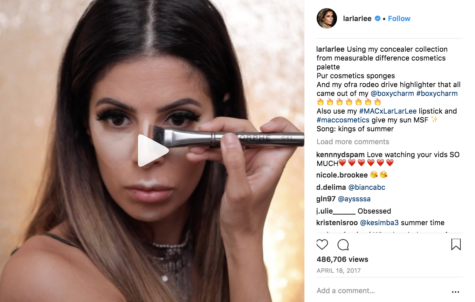
By involving the influencers on the product side, they become more personally invested in your brand. Their name, reputation, and revenue are all now intimately tied with your brand.
As such, you can expect them to promote your brand heavily, even going above and beyond the terms of your agreement, to sell those products. When influencers are directly involved in creating the brand’s products, their promotion feels more authentic and resonates better with their audience.
15. Commercials
Filming a commercial?
Don’t hire an actor; use one of your influencers instead. Traditional influencers can bring authenticity and credibility to your commercials, as they have established trust with their followers.
Wix partnered with model Karlie Kloss on an ad campaign. A model may not seem to make sense for a web hosting company at first unless you’re aware of KODE WITH KLOSSY – Karlie’s program to encouraging girls to enter STEM fields.
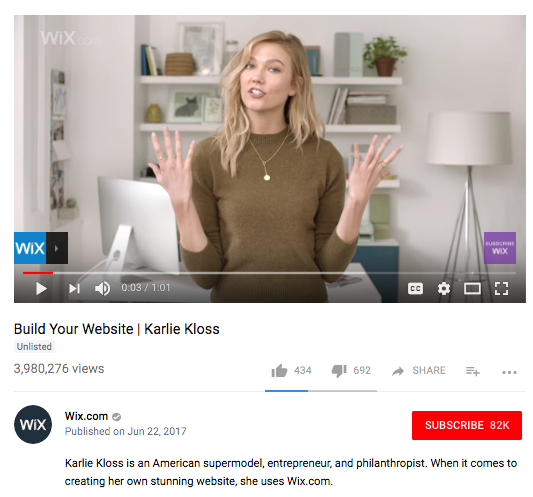
Being good marketers, Wix didn’t isolate this partnership to a single channel.
They also issued a press release about the commercial to ensure it got picked up and co-promoted with Karlie on Instagram and other channels.
16. Contests and giveaways
Plenty of brands host sponsored giveaways and contests with their influencers.
These are popular because they drive a lot of frenzied excitement for your brand, along with the chance to be “chosen” by the influencer as a winner (even if it’s random, it still feels special).
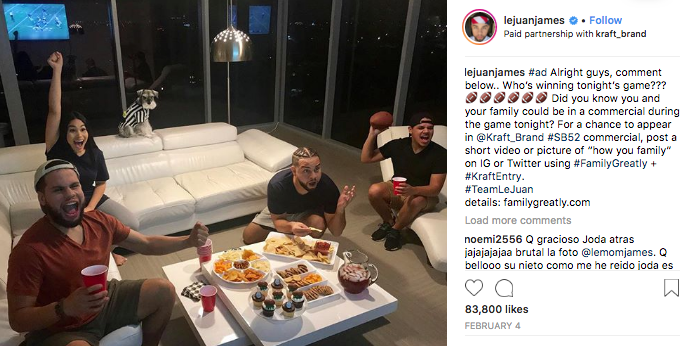
Last Super Bowl, Kraft took sponsored contests to a whole new level. Their Super Bowl commercial featured Instagram and Twitter users enjoying football with their family.
To get fans to submit their entries, the brand partnered with six Instagrammers, including two micro-influencers, to promote the campaign.
In their posts, influencers not only explained how to enter, but they also showed fans how. Contests like these can generate valuable user-generated content that promotes your brand and increases audience engagement.
17. Product launches
Launching a new product line?
Influencers will let the people know.
When M&Ms launched new flavors in Canada, they partnered with Twitter micro-influencers like @TorriWebsterof 32.8K followers to share the news and drive the discussion. Establishing a clear campaign timeline is crucial to coordinate talent negotiations, content approval, and campaign execution, ensuring a successful product launch with influencers.
To win concert tickets, users had to tweet their favorite flavor using a branded hashtag – driving some free user research for the company, too.

18. Foot traffic
Running a pop-up store?
Still, need to drive more attention at your event?
You can only reach so many people on your accounts. Leverage influencers to boost your RSVPs. Partnering with influencers allows you to reach a highly targeted audience, ensuring your event promotion connects with the right people who are most likely to attend.
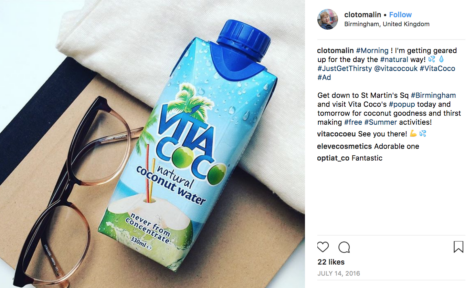
When Vita Coco hosted a pop-up, the water brand partnered with Instagram lifestyle micro-influencers like @CloTomalin to send interested shoppers their way.
Timing is critical with this type of promotion, so make sure your influencers post ahead of your event.
19. Online sales
Pop-ups don’t have to be IRL (in real life).
You can host virtual pop-ups (otherwise known as sales) on your website, and you can still use influencers to drive visits.
Annapolis, MD-based Here: A Pop Up Shop connected with local influencers like @Properhunt to increase awareness. She shared some of her top picks from their Turkish towel sale, making it easy for fans to know precisely which products to buy. Influencer-driven virtual pop-ups are highly effective for boosting sales online.

20. Product tutorials
Don’t just have influencers tell fans about your products. Have influencers show them how they can use them. Youtube influencers are an excellent medium for this. Creating tutorials that match the audience’s preferences ensures maximum engagement and effectiveness.
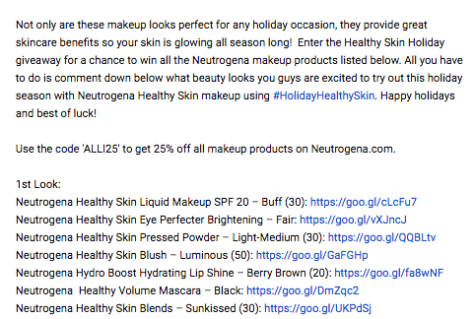
Neutrogena partnered with YouTube beauty vlogger MakeupByAlli to demonstrate how their makeup can be used for two separate holiday looks.
The video is like her other video tutorials, but it features Neutrogena products exclusively. In the video description, Alli links to all of the featured products and includes her promo code, too.
Measuring Success
To ensure your influencer marketing campaigns are effective, it’s important to measure success using clear key performance indicators (KPIs). Track engagement rates, website traffic, and sales generated from your influencer marketing campaign to understand what’s working and where you can improve. Influencer marketing platforms can help you monitor campaign performance, analyze sponsored content, and optimize your social strategy for better results.
Incorporate exclusive discount codes and unique links to track conversions directly from influencer collaborations. Gathering feedback from your target audience through surveys or focus groups can also provide valuable insights into how your brand and products are perceived. By regularly evaluating your influencer marketing efforts and making data-driven adjustments, you can boost brand awareness, drive engagement, and achieve your marketing goals with every campaign.
Over to you
Hopefully, this post sparked lots of influencer marketing ideas in you. Now, turn those ideas into campaigns!
Btw: Want to take your social media performance to the next level?