
If you listen to other content creators’ success stories, they built massive follower bases just by posting consistently and smartly. So effortless and natural.
However, on the other hand, it’s you who posts regularly, follows all the trends and strategies, but still after months the account shows no significant results.
Ever wondered why? What exactly are they doing right? And you aren’t?
Honestly, ranking well on social media isn’t about luck or just talent alone. However, if you want to grow, you have to be strategic.
This guide breaks that process down into 8 actionable steps, so you can stop guessing and start growing.
8 Step Guide To Create Content That Instantly Engages The Users and Builds Your Audience
Here is a simple and thorough guide approved by professionals that can surely help you create engaging social media content that always performs.
So, keep on reading.
Step 1: Know Exactly Who You’re Talking To
Remember, on social media, your posts and captions can only perform well and trend when they actually grab the reader’s attention. Therefore, before you write even a single word, make sure to first be clear about who exactly your target audience is, which platforms your audience prefers, and the posting habits they respond to.
Ask yourself:
- Who are you targeting?
- How old are they?
- What are their interests?
- What problems do they face?
- What kind of content do they already engage with?
Studying past performance and audience behavior helps reveal what your audience prefers, which content formats generate the highest engagement, and when they are most likely to be active online.
While social media platforms provide basic audience insights, dedicated analytics tools like Sotrender can help you go further by identifying your top-performing posts, uncovering audience interests, tracking engagement trends, and finding the best times to publish content. These insights make it easier to create engaging social media content that resonates with your audience instead of relying on assumptions.
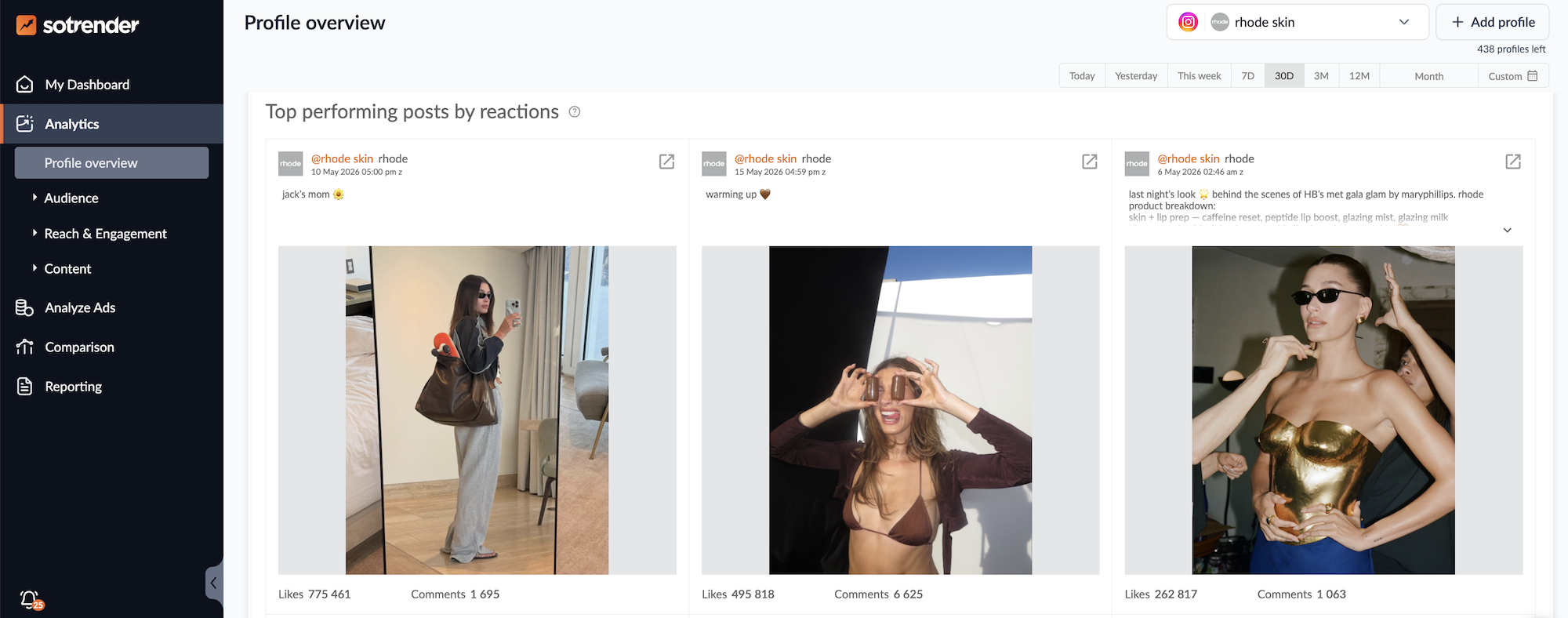
Research your audience, analyze the data, and only when you clearly understand who you’re speaking to should you start creating content. Posting frequency should also align with audience engagement patterns, especially considering that 59.41% of social media posts received zero engagement within 30 days.
Step 2: Choose the Right Platform – Don’t Try to Be Everywhere
Remember, not every platform works for every brand.
For instance, if you are selling lifestyle products, Instagram can do the best marketing for you. Whereas, if you are targeting professionals by job function, LinkedIn is your marketplace.
Still confused?
Well, to help you effectively understand which platform suits your brand, here is a quick breakdown of where you need to focus and why:
- Instagram → Visual brands, lifestyle, products
- LinkedIn → B2B, thought leadership, professional audiences
- TikTok → Short video, younger audiences, entertainment
- X (Twitter) → News, opinions, real-time conversations
- Facebook → Communities, local businesses, paid ads
Remember, marketing everywhere makes you appear scattered. And instantly kills the brand identity.
So, pick 1–2 social media platforms where your audience actually spends time instead of trying to show up on multiple platforms at once. Master those before you even think about expanding.
Step 3: Lead With a Hook That Stops the Scroll
Users online, especially on social media, have a very short attention span. So, as a content creator, you only have about 1.7 seconds to capture attention immediately in crowded feeds. Or else they’ll leave without even giving a second glance.
Therefore, if you want to prove your content is worth their time, you have to hook them in the first line or the first frame of your video.
Here is what you need to create a strong, irresistible hook:
- Challenge a belief → “Everything you know about posting times is wrong.”
- Promise value → “Here’s how to double your engagement in 7 days.”
- Spark curiosity → “We posted 3x a day for a month. Here’s what actually happened.”
Strong hooks help create posts that feel worth reading, and compelling narratives make messages more memorable.
Notably, the hook shouldn’t be clickbait. However, it has to be realistic and accurately reflect what your content actually covers. Captions should stay concise and end with a clear prompt or call to action to encourage participation.
Step 4: Use Visuals That Work for the Feed
Visual content has more impact when it has strong visual appeal, and sometimes a well-curated image can convey a message that a thousand written words fail to illustrate.
And most importantly, the young generation finds it boring to go through walls of text while scrolling. So, adding visuals is surely a powerful way to engage them.
Posts with visuals generally receive higher engagement than text-only posts.

But the notable point here is that you can’t just use any visuals. Instead, you have to be intentional and thoughtful about what you present to your audience.
So, to help you get it right, here are some rules you can surely follow to create scroll-stopping visuals every time:
- Use high contrast so your post pops in a busy feed
- Keep text on images minimal – under 20% of the image area
- Use consistent colors and fonts to build brand recognition over time
- For video, always add captions – most people scroll with the sound off, and video content can account for 82% of internet traffic
You don’t need Photoshop. Tools like Canva make it easy to create scroll-stopping visuals in minutes, even with zero design experience, especially when you start with high-quality photos.
Step 5: Repurpose Content Across Formats
Creating fresh content from scratch every single day is exhausting, and honestly, unnecessary.
One good idea can fuel an entire week of content. Your blog posts and blog articles can become social media posts like a carousel on Instagram. That same carousel can become short form video on TikTok, and short videos drive 31.38% of engagement on social media. The video script becomes a thread on X. The key takeaways become quote graphics for stories.
The only skill you need here is just to know when and how to adapt and reformat your content.
Work smarter, not harder. Repurposing also reinforces your message across different formats and reaches audiences who prefer consuming content in different ways. Repurposing across content formats boosts engagement because different people respond to different styles on different social channels. Your own content can also be adapted for Facebook, where video posts often earn higher engagement than static images.
Step 6: Refresh Old Content Instead of Always Starting Fresh
Social media is fast-moving. No matter how good, informative, or engaging your post is, after some time, it will fade and be replaced by some other fresher post.
But here is a catch: some posts hold real value, and it honestly is a shame to see them buried. Reviewing past performance shows which ideas drove the most engagement and deserve a refresh.
But reposting them word-for-word is also lazy. And instead of constantly creating content from zero, refreshing top-performing posts can help you create engaging social media content faster.
So, eventually, most people just let it die.
But trust me, it is the biggest mistake you can make.
Insightful evergreen posts are the easiest way to earn consistent engagement.
All you need is, instead of wasting your time in rephrasing manually, just take help from an AI-powered paraphrasing tool to do the job for you.
The tool doesn’t just swap words; it understands the tone and intent and then restructures the sentences to give your writing a fresher, more polished, and natural look.
This way, using the tool, you can easily breathe new life into your best old content within seconds. In many cases, quality content reposted or updated weekly performs better than daily low-value posts.
Step 7: Study Your Analytics – Then Actually Adjust
In reality, if you want your content to perform well, then don’t ever rely on gut feeling alone.
Instead, make sure to track and make decisions by analyzing real-time data.
Trust me, data tells you what your gut can’t.
Every social media platform provides built-in analytics, and those engagement metrics can offer valuable insights. However, native analytics are often limited when it comes to historical data, competitor benchmarking, or advanced performance analysis. That’s why many marketers use external social media analytics tools like Sotrender to gain a deeper understanding of what drives engagement and content performance across channels.
Look for the details such as:
- Reach – how many people saw your post
- Engagement rate – how many interacted vs. how many saw it
- Saves – a strong signal that your content felt genuinely valuable
- Profile visits – did your post make people curious enough to check you out?
- Follower growth – is your content bringing in new people over time?
- Likes, comments, and shares – core signals that show how people respond to your content
Replies, saves, and direct messages can reveal deeper insights and deeper engagement than surface-level likes alone.
Notably, let’s be realistic, you can’t really review everything every day, so schedule it to check once every week or twice a month. But be consistent.
Seek answers to questions like, “Which format got the most saves?” “Which topic drove the most comments?”
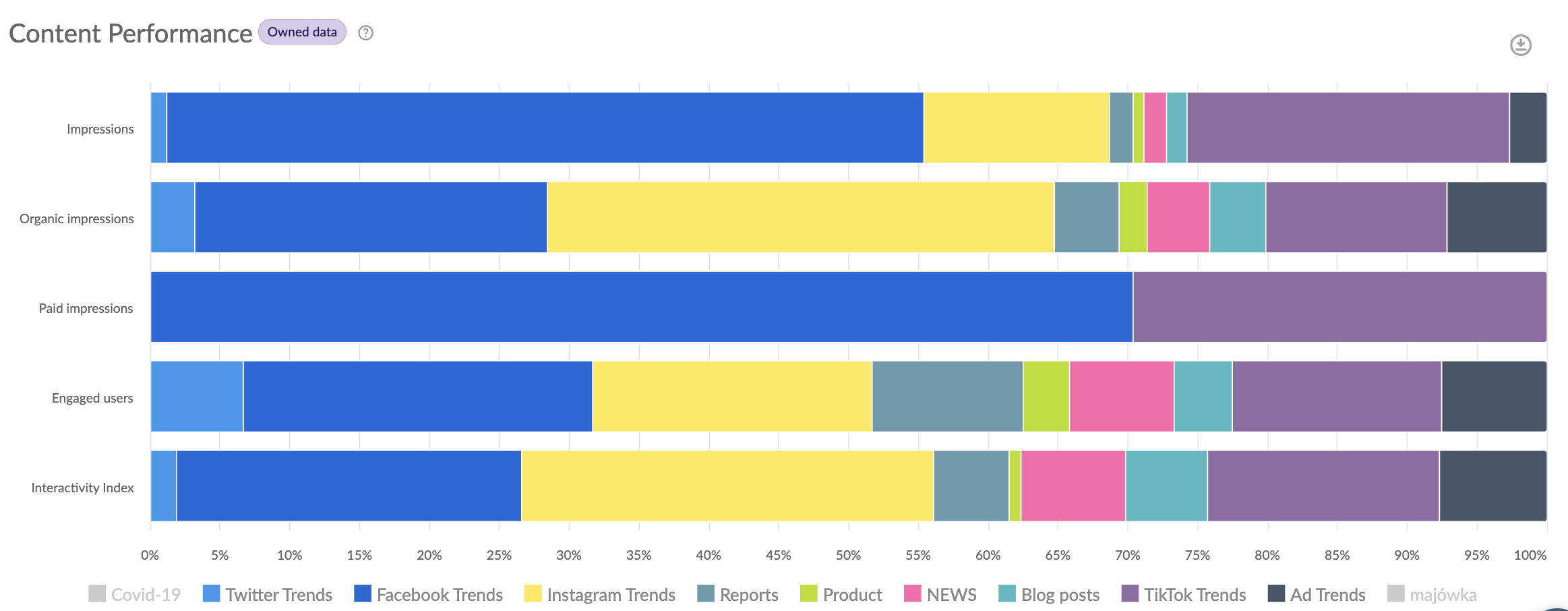
Double down on what’s working, and use those insights to refine your future content strategy. The most successful brands don’t create content based on assumptions – they rely on data to continuously improve their results.
If you’re managing multiple social media channels, a dedicated analytics platform like Sotrender can make this process significantly easier by helping you track performance trends, identify top-performing content, and benchmark your results against competitors in one place.
Step 8: Engage Back – Social Media Is a Two-Way Street
Most content creators think that posting the content is the final step. Whether it performs well or not has nothing to do with them.
But trust me, posting and ghosting are the fastest ways to kill your growth.
Visitors don’t just engage with content; however, they actually connect when you engage back, and that’s how you build meaningful engagement. Interactive content like native polls or quizzes can encourage participation and turn followers into active participants.
Therefore, if you want your post to grow, then make sure when someone comments, you reply. When someone DMs you, you respond. When people tag you, you acknowledge it. Resharing user-generated content when appropriate can strengthen trust, and it often lifts engagement because audiences trust real customer contributions more than brand posts.
And trust me, once you get hooked to this routine, you won’t just gain followers; however, you’ll actually start to build a real community around your content. Personal stories and purpose-driven replies help create emotional connections and deeper meaningful connections with followers. In the long run, a consistent brand voice and strong audience relationships are what turn that into a loyal community.
Start Creating Engaging Social Media Content Today
Most creators fail not because they lack talent, but because they treat social media like a lottery. Many brands struggle because they spread weak, promotional content instead of relevant content tailored to their audience. Post enough tickets and hope one wins. But growth doesn’t work that way. It rewards consistency, intention, and the willingness to actually learn from what you post.
The 8 steps in this guide aren’t theory. They’re a repeatable system. Strong social media marketing depends on engagement worthy content, varied formats, and practical tips applied consistently.
And the difference between accounts that grow and accounts that stall usually comes down to one thing: execution. Better marketing efforts can boost engagement, generate leads, increase website traffic, and strengthen your social media presence when the content supports your own brand. So pick one step you’ve been ignoring. Start there. Today. Try entertaining content, relevant news, or a social media influencer partnership when it fits your own brand and helps hold attention. Because the best content strategy is the one you actually follow through on.