


Social media is changing fast, and simply maintaining a brand presence no longer guarantees results. With the rise of community-led growth, social commerce, and search behavior on social media platforms, marketers are under pressure to understand why their social media posts perform – not just how much they perform, and to accurately measure overall social media performance.
Native analytics can highlight basic performance patterns, but they rarely reveal the full story or offer guidance you can immediately act on. To confidently navigate shifting user habits, validate your social strategy, and uncover early signals in the market, professionals increasingly rely on advanced third-party social media analytics tools.
What sets these platforms apart is their ability to synthesize data from multiple networks into a single, strategic view. Instead of isolated metrics, you get a richer interpretation of performance – supported by sentiment analysis, competitive analysis, and other valuable insights that directly influence budgets and business outcomes. Advanced reporting features in these tools enable strategic decision-making and performance comparisons, helping marketers create customizable reporting for better social media management and comprehensive analysis.
Below, you’ll find a breakdown of 13 standout social media analytics tools that equip marketers with the clarity and intelligence needed to thrive in the evolving 2026 social environment. These tools provide deep insights into customer preferences and emerging trends, empowering teams to make more informed decisions and providing actionable insights to key stakeholders.
Introduction to social media
You know that sinking feeling when you’ve poured your heart into a social media campaign, hit “publish” with confidence, and then… crickets? Yeah, we’ve all been there. Social media’s become this must-have piece of the marketing puzzle – and honestly, it’s kind of wild how it connects businesses with their people in ways we never thought possible. But here’s the thing: with billions of folks scrolling, liking, and sharing every single day, the amount of data flying around is absolutely bonkers. That’s where social media analytics swoops in like your data-savvy best friend. When you’ve got a solid analytics tool in your corner, all that messy raw data suddenly transforms into those “aha!” moments that’ll completely reshape how you approach your social media game.
Here’s what gets exciting – analytics doesn’t just show you pretty charts (though those are nice too). It’s like having x-ray vision into your social media performance, letting you peek behind the curtain to see what’s actually working and what’s just… well, not. You’re tracking campaign effectiveness, getting real-time snapshots of who your audience really is, and watching those engagement numbers like they’re telling you a story. And they are! These insights become your secret weapon for making smart, data-backed moves instead of just throwing spaghetti at the wall and hoping something sticks. Whether you’re chasing brand buzz, driving traffic to your site, or trying to turn browsers into buyers, weaving analytics into your daily workflow isn’t just smart – it’s survival in this crazy competitive landscape.
What are social media analytics tools?
Social media analytics tools are basically your backstage pass to what’s actually happening with your content. You know those moments when you post something you’re convinced will blow up, but instead it gets three likes from your mom, your intern, and that bot account with the suspicious username? Yeah, these tools help you figure out why that happened.
Instead of just staring at Instagram, Facebook, TikTok, LinkedIn (and whatever new platform launched while you were reading this), these platforms pull all your data into one place. They’re like having a social media detective that never sleeps – tracking your profiles, campaigns, and how people actually interact with your stuff to show you what’s going on behind those vanity metrics.
Sure, likes and comments are nice, but analytics tools dig deeper. They reveal the good stuff – who’s really seeing your content, how people engage when they’re not just double-tapping, what your audience actually thinks (brace yourself), and whether your content strategy is working or just making you feel busy. They even spy on your competitors, which honestly feels a little sneaky but is totally legal and necessary.
Here’s the best part: they turn that overwhelming mountain of data into something you can actually use. Instead of drowning in spreadsheets that make your eyes glaze over, you get dashboards, charts, and reports that actually make sense. Suddenly you can spot patterns, compare how you’re doing across platforms, figure out if your budget is working as hard as you are, and make decisions that don’t feel like educated guesses.
Bottom line? They’re your reality check for understanding what works, what bombs, and why – so you can build something people actually want to follow.
Benefits of using a social media analytics tool
Look, we’ve all tried the “post and pray” method. You put content out there, cross your fingers, and hope the algorithm gods smile upon you. But here’s the thing – the brands crushing it aren’t just lucky. They’re using dedicated analytics platforms that turn social media from a guessing game into something you can actually control and customize. No more wondering if that campaign worked or if you should just start posting cat memes instead. Below are the game-changing benefits that’ll make you wonder how you ever managed without them.
A complete, unified view of performance
Remember when you used to have seventeen browser tabs open, frantically switching between Facebook Insights, Instagram Analytics, TikTok’s whatever-they-call-theirs, and LinkedIn’s numbers that somehow never add up? Those days are over. Social media analytics tools gather everything into one dashboard, giving you the full picture without the browser gymnastics. You’ll finally see how your Instagram Stories compare to your LinkedIn posts, or whether your TikTok strategy is actually worth the hours you spend perfecting those transitions. It’s like having a control center for your entire social media universe – and yes, it feels as cool as it sounds.
Deeper audience understanding
Here’s what’s wild: you might think you know your audience, but you probably don’t. These tools reveal who’s really engaging with your content – not just who you think should be. You’ll discover your audience demographics, see behavior patterns that’ll surprise you, and understand what makes people stop scrolling and actually care about what you’re saying. Maybe your sophisticated business posts are flopping while your behind-the-scenes content is killing it. Maybe your audience is completely different from who you thought they were. This intel helps you create content that actually connects instead of content that just checks boxes.
Smarter, data-driven decision-making
Every marketer has that moment when they realize they’ve been making decisions based on hunches, not facts. Analytics platforms change that game entirely. They show you what’s actually working – not what you hope is working or what worked for someone else. You’ll know exactly where to spend your budget, which content formats to double down on, and which strategies to abandon before they waste more of your time. No more throwing ideas at the wall to see what sticks. Every decision becomes intentional, strategic, and backed by real data that you can trust.
Competitor and market benchmarking
Let’s be honest – we all stalk our competitors. But scrolling through their profiles and thinking “they’re doing better than us” isn’t exactly scientific research. Advanced analytics tools let you track competitor performance properly, see what’s working in your industry, and spot trends before everyone else jumps on them. You’ll know if you’re actually behind or if you just had a bad week. Plus, you might discover that your “failing” campaign is actually outperforming the competition – which feels pretty amazing when those impostor syndrome moments hit.
Clearer proof of ROI
Nothing’s worse than sitting in a meeting where someone asks “but what’s social media actually doing for us?” and you don’t have a good answer. Analytics tools solve this nightmare scenario by showing exactly how your social media connects to real business results – traffic, conversions, revenue, the whole nine yards. You’ll have customizable reports that prove your work matters, numbers that make executives nod approvingly, and the confidence that comes from knowing your efforts are paying off. No more defending your budget with vague promises about “brand awareness” – you’ll have the receipts.
Social channels
Look, each social media channel – Facebook, Instagram, LinkedIn, Twitter – they’re all completely different beasts. You’ve probably figured this out the hard way when that killer Instagram post flopped on LinkedIn, or when your professional Twitter content got crickets on Facebook. Every platform’s got its own crowd and its own vibe, which means copy-pasting the same content everywhere? Yeah, that’s not gonna work. The smart move is keeping an eye on your metrics – follower growth, how much people actually engage, which posts hit and which ones… don’t.
Here’s the thing though – once you start really understanding what makes each platform tick, that’s when the magic happens. You’ll know your LinkedIn audience wants industry insights while your Instagram crew is all about those behind-the-scenes shots. Digging into those engagement numbers and seeing where your people actually hang out? That’s how you stop wasting time on channels that just aren’t worth it. Bottom line – let the data tell you where to focus your energy, because guessing is expensive and nobody’s got time for that.
Getting started with social media analytics
Starting your social media analytics journey? You’re probably staring at a dozen different tools thinking “which one won’t make me want to throw my laptop out the window?” Trust us – we’ve been there. Whether you go with a dedicated analytics platform, good old Google Analytics, or one of those all-in-one social media management tools, the real trick isn’t picking the “perfect” option – it’s actually using whatever you choose to track performance across all your networks and turn those numbers into something that actually makes sense. First things first: figure out which metrics actually matter for your business goals. Spoiler alert – it’s probably not follower count.
Here’s where the magic happens – set up those custom reports and automated dashboards so you’re not manually pulling data like it’s 2010. These reporting features become your best friend, letting you spot trends without refreshing analytics tabs like they’re social media feeds. When all your channel data lives in one place, suddenly you can see patterns you never noticed before – like how your Tuesday posts consistently outperform everything else, or that video content you thought was “just okay” is actually driving serious engagement. Keep reviewing this stuff regularly, and you’ll start making decisions based on what’s actually working instead of what you think should work. That’s when your social media strategy stops being guesswork and starts delivering results you can actually measure.
Best social media analytics tools for your brand
Sotrender
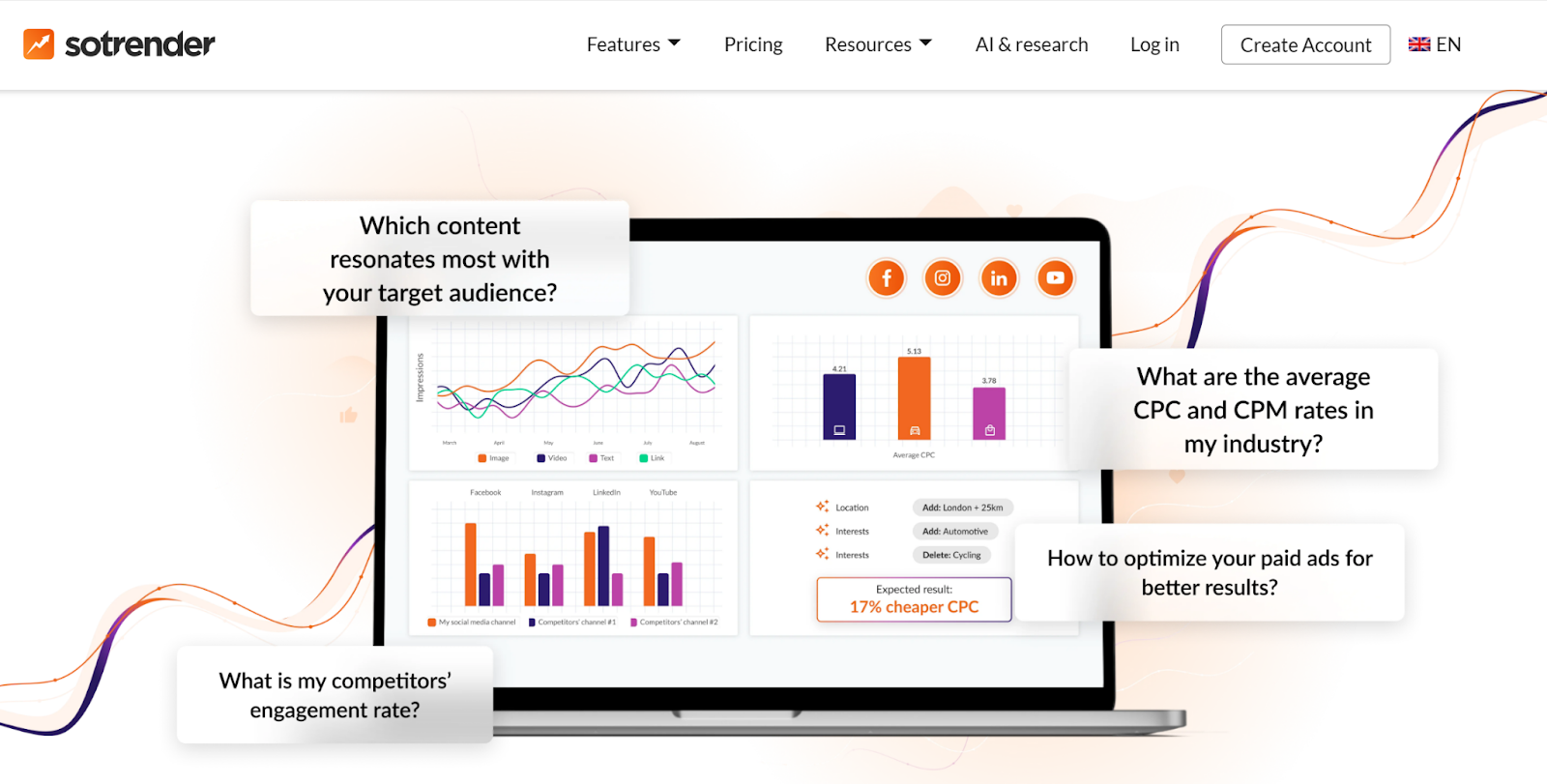
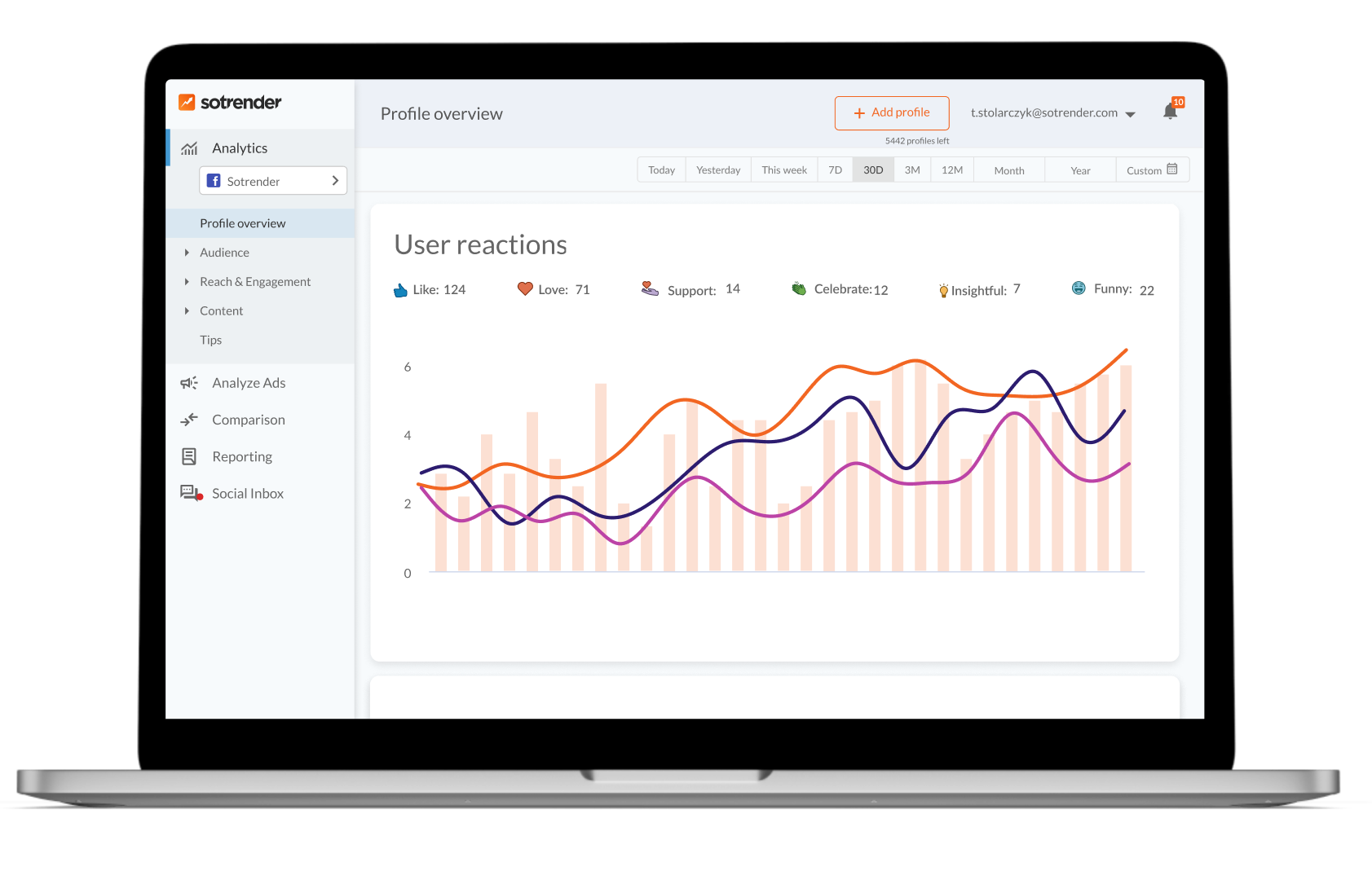
If you’re looking for a cross-channel social media analytics tool that goes far beyond basic metrics, Sotrender is one of the most powerful choices on the market. It’s designed for marketers who want a deeper understanding of performance across Facebook, Instagram, TikTok, and LinkedIn, all from one intuitive dashboard. You can quickly compare metrics across channels, explore content effectiveness at a granular level, track influencer marketing campaigns, and monitor everything from impressions and engagement to community growth and viewing patterns, providing valuable data for your social media strategy.
Its reporting capabilities are equally impressive. You can tag posts to understand campaign performance, filter down to the exact information you need, and instantly generate clean, presentation-ready social media reports. Sotrender makes it easy to monitor your KPIs the way you want, and everything is structured so even complex data feels accessible, delivering key insights that drive data-driven decisions.
One of Sotrender’s standout advantages is Ads Optimization, its AI-driven extension for Meta ads. Instead of increasing your budget, the tool gives you automatic recommendations to improve ad results with the resources you already have. Combined with Sotrender’s strategic research capabilities, competitive benchmarking, audience insights, and highly intuitive interface, it’s a solution that delivers enterprise-level power at an affordable price point. For marketers who want clarity, efficiency, and smarter decision-making across every stage of their social media strategy, Sotrender is a clear leader.
- 7 days for free
- No credit card required
- Access to all premium features
Sprout Social
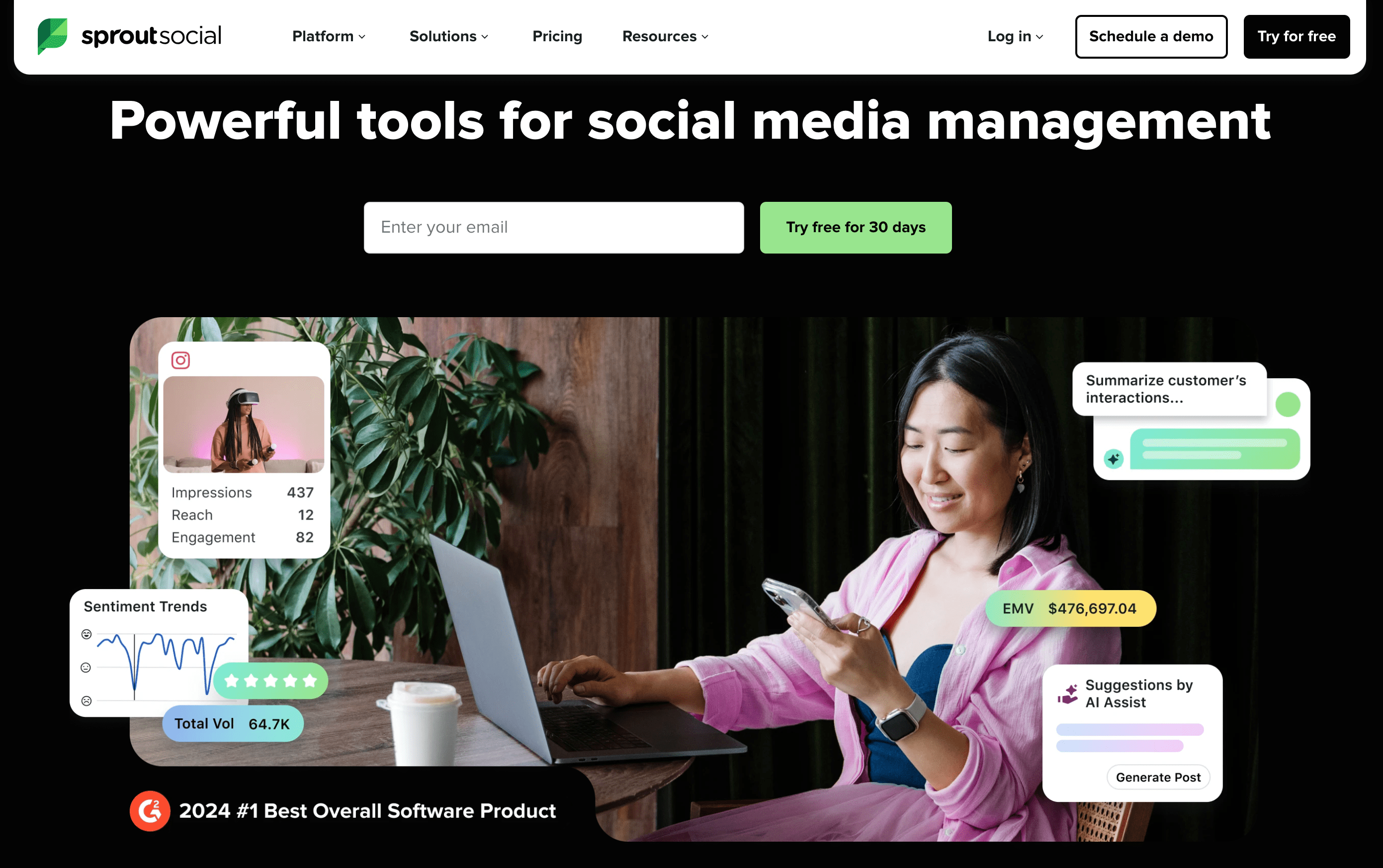
Sprout Social is a popular choice for brands that need reliable, cross-channel analytics and influencer campaign reporting. The platform lets you track influencer campaigns and measure post engagement, providing insights into how users interact with your content and the ROI of influencer activities. You can dig into performance on a single network or compare metrics across Facebook, Instagram, TikTok, YouTube, LinkedIn, and Threads – all from one centralized dashboard. You can track everything from impressions and follower growth to engagement trends and video performance, making it easy to understand what’s working across your social ecosystem and enhancing audience engagement.
Sprout also offers content tagging for campaign analysis and straightforward, presentation-ready reports that simplify data sharing. For customer care teams, additional inbox activity and case management reports help monitor response times and support workloads, improving customer loyalty. Overall, it’s a robust tool for teams looking to unify analytics and streamline social reporting.
Buffer
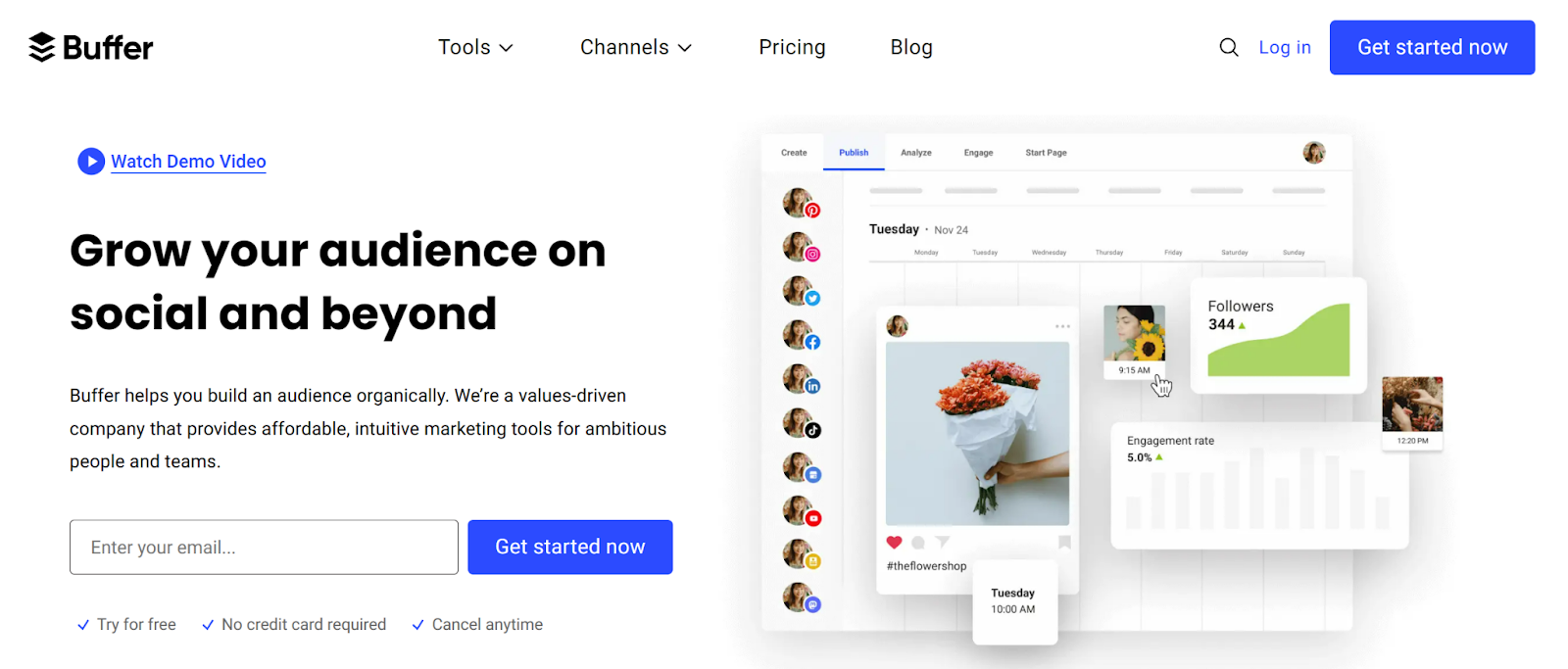
Buffer supports a broad mix of platforms, including Bluesky, Facebook, Instagram, LinkedIn, Mastodon, Pinterest, Threads, TikTok, YouTube and X. While it’s mainly known as a scheduling tool, it also offers basic analytics that highlight useful insights like your top-performing post types, best posting days and content formats.
You still get access to standard social media metrics such as follower growth, impressions, engagement totals, hashtag performance and audience demographics, all presented in a simple dashboard. Buffer also enables you to track follower trends to monitor account growth over time, providing a clearer picture of how your target audience evolves. Buffer also lets you export quick branded social media reports, which can help streamline weekly or monthly updates without much manual work.
Statusbrew
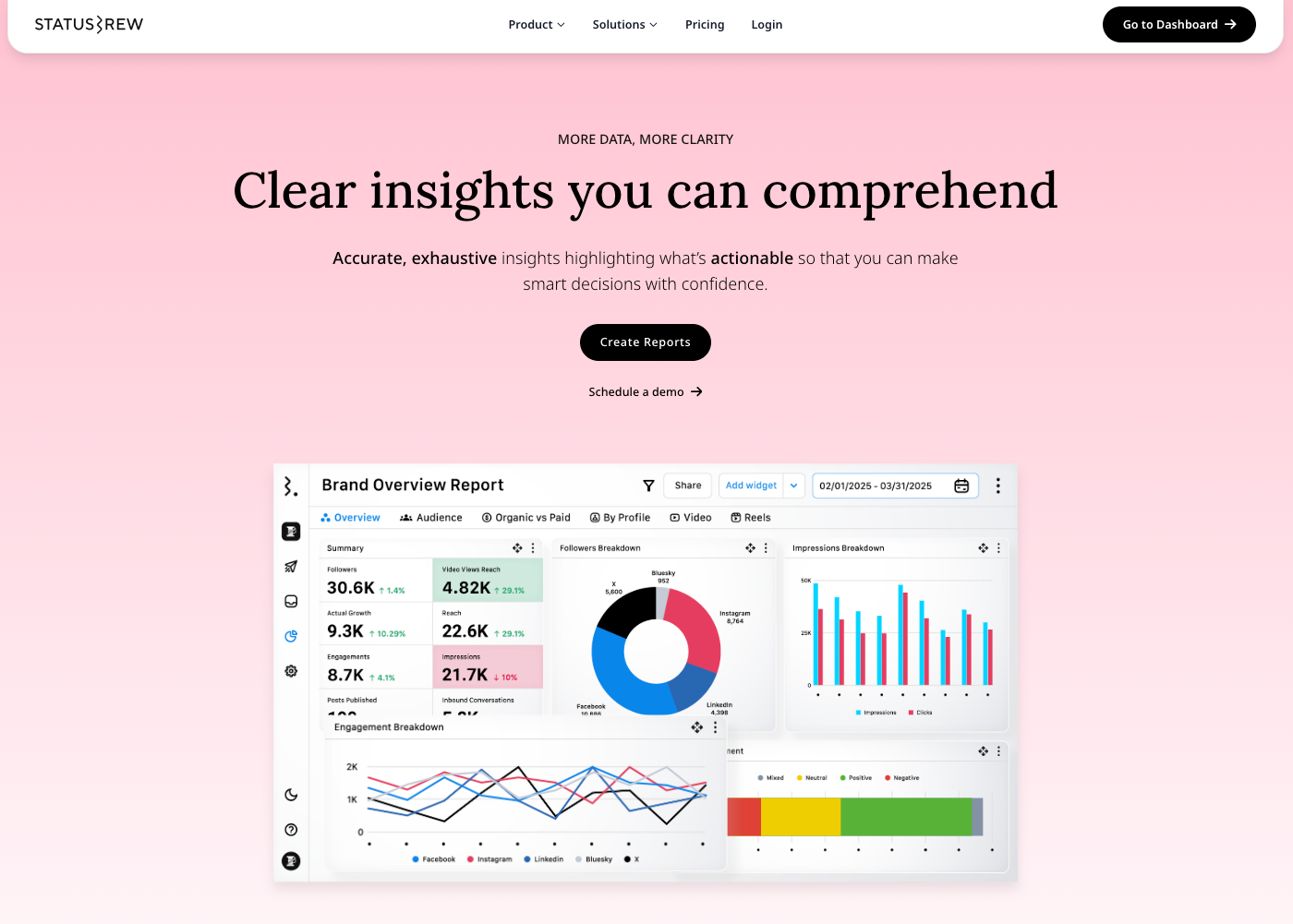
Statusbrew is a powerful social media analytics and management platform built for teams, agencies, and multi-brand organizations. It goes beyond basic metrics, offering 250+ KPIs across Instagram, Facebook, LinkedIn, Twitter/X, TikTok, YouTube, and Google Reviews. You can dig deep into performance on a single network or compare metrics across channels, track follower growth, engagement trends, content performance, and audience behavior, making it easy to understand what’s working across your entire social ecosystem.
Statusbrew also offers custom and white-label dashboards, making it simple to build presentation-ready reports tailored to your goals and share them directly with clients or stakeholders. For teams, it includes a unified inbox for managing organic, paid, and review conversations, along with approval workflows, auto-moderation rules, and collaboration tools. Overall, it’s a robust solution for brands and agencies looking to combine deep analytics with full social media management without the high per-user costs.
Sendible
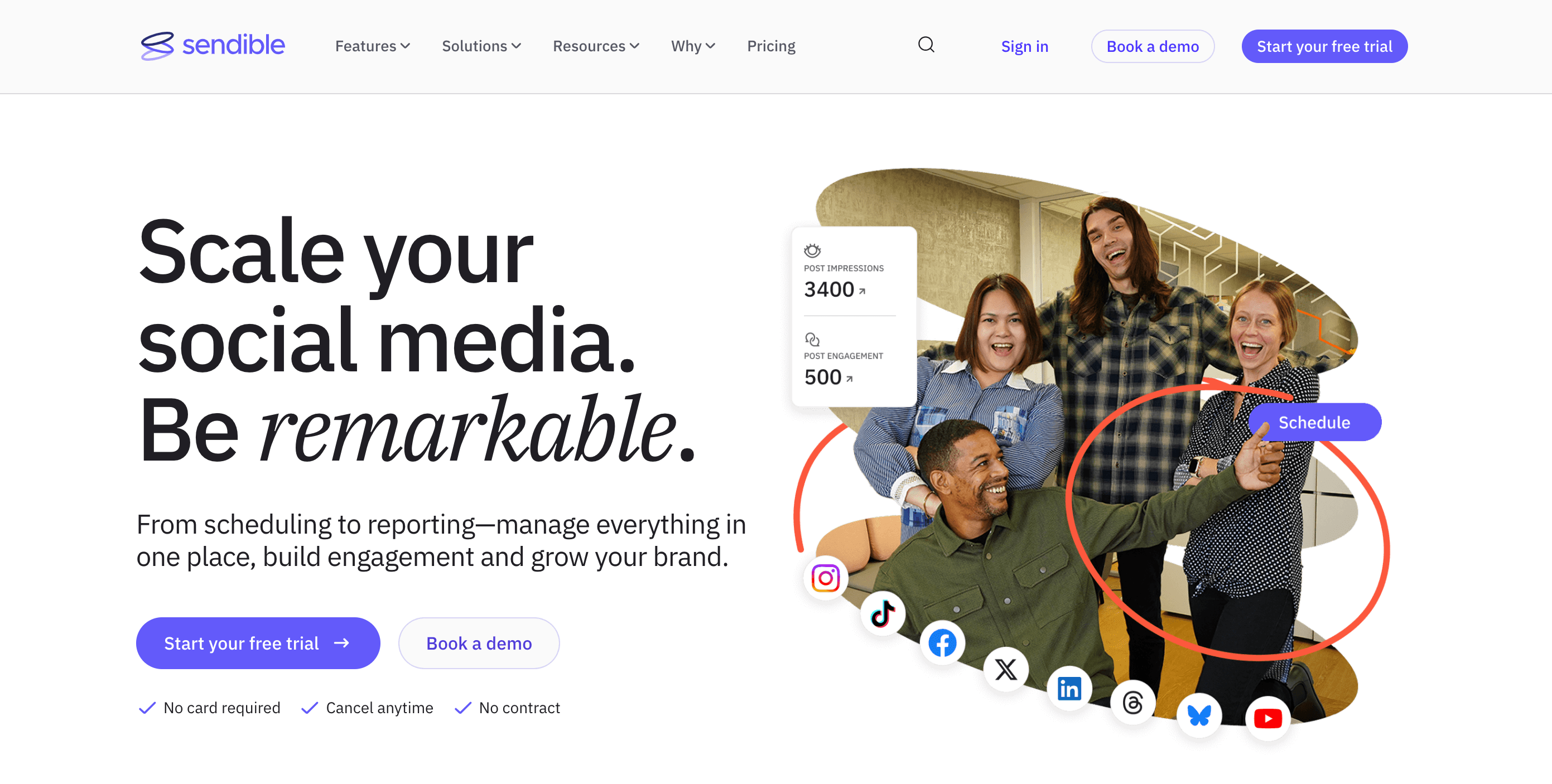
Sendible is designed primarily for agencies that need strong social media management combined with flexible analytics. It supports Facebook, Instagram, LinkedIn, YouTube, TikTok and X, offering automated, customizable reports and more than 200 analytics modules to choose from. Beyond reporting, Sendible includes tools for content creation, editing, scheduling and team collaboration, along with a unified inbox for handling comments, DMs and mentions, as well as tracking brand mentions for reputation management. One of its biggest advantages is full white-labeling, making it ideal for agencies wanting to present Sendible as their own branded solution for clients.
Keyhole
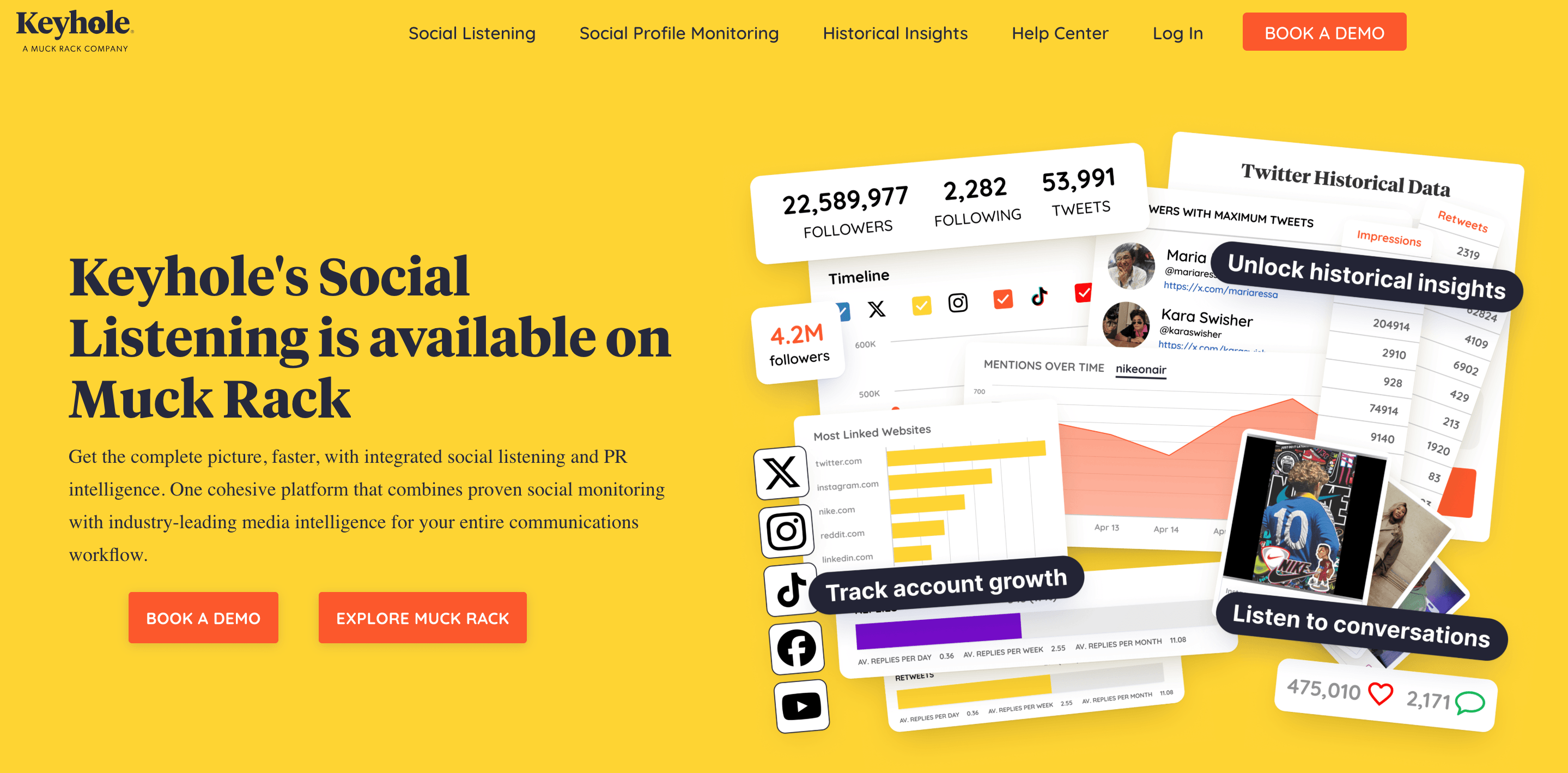
Keyhole is a real-time monitoring and analytics platform covering X, Instagram, Facebook, YouTube, LinkedIn and TikTok. It tracks what audiences are saying about your brand, analyzes competitor behavior, and evaluates overall social media efforts, identifies influential creators and helps you spot rising trends. The platform aggregates analytics across profiles to give you one centralized view, along with historical performance data that shows whether your strategy is improving over time. Keyhole is used by agencies, B2C businesses, nonprofits and companies in media or entertainment looking for fast, continuous insights and in-depth analysis.
Social Status
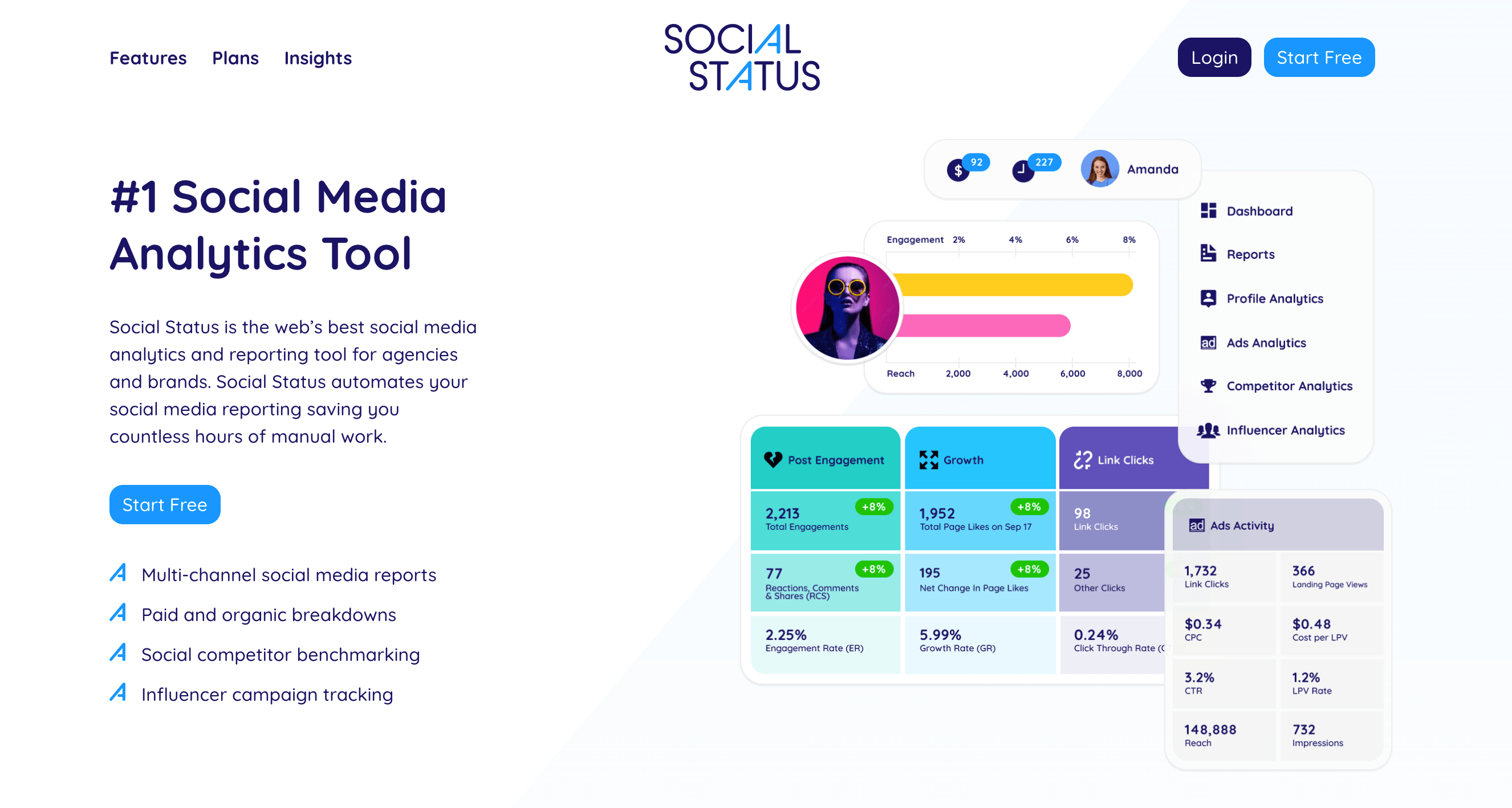
Social Status is an affordable analytics tool ideal for small businesses managing organic content, paid campaigns, and occasional influencer partnerships. It supports major platforms like Facebook, Instagram, LinkedIn, TikTok, YouTube, and X, and offers a free plan for one profile with paid plans starting at just $9/month. While advanced features like custom reports, full platform coverage, and detailed influencer analytics require higher-tier plans, it still provides an easy way to track core performance metrics and ad results in a single, straightforward dashboard — perfect for small teams that need solid insights without a big budget.
BuzzSumo
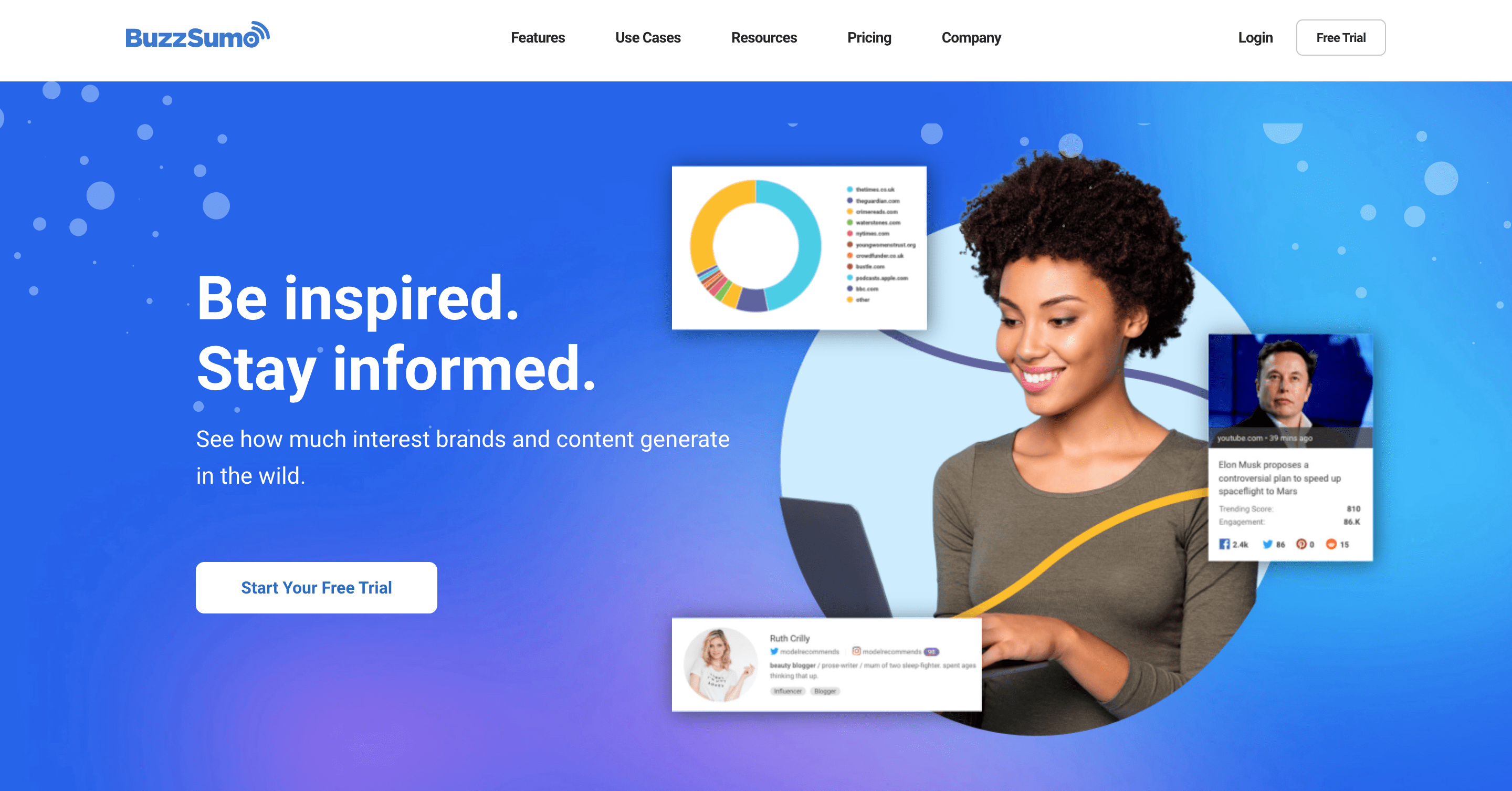
BuzzSumo isn’t exclusively a social media tool, but it’s widely used to analyze how content performs across social channels, including tracking the performance of individual social posts. It shows how many shares or interactions a blog post or URL receives on networks like Facebook, X and Pinterest, and helps you compare your content against competitors targeting similar keywords. BuzzSumo also reveals patterns in top-performing content – such as ideal length, topic focus or headline style – so you can shape a more effective content strategy across your social distribution channels.
Rival IQ
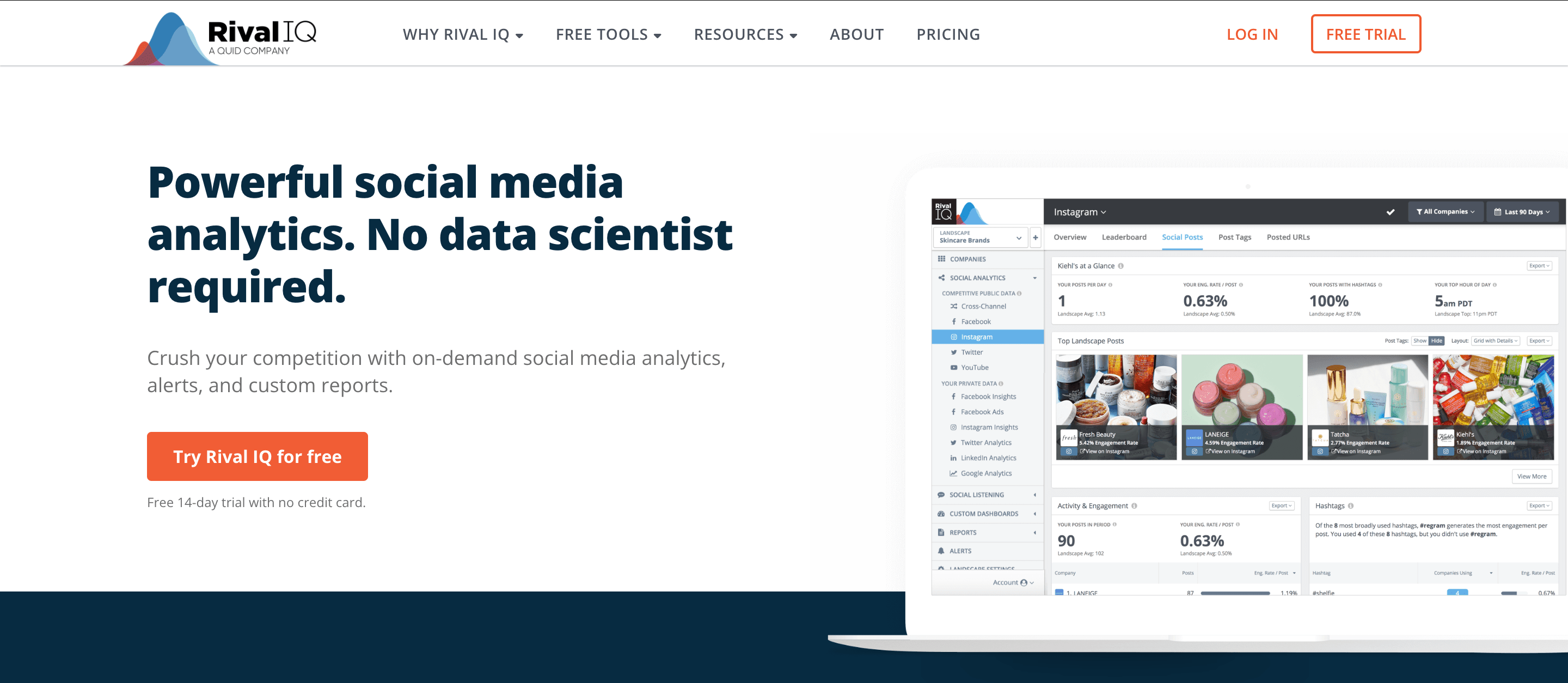
Rival IQ offers multi-platform analytics with a strong emphasis on competitive intelligence. It covers performance tracking, social listening, influencer insights and comprehensive reporting across channels, including YouTube, with premium analytics features for advanced users. Agencies benefit from customizable dashboards and downloadable reports in formats like PPT, PDF or CSV. Rival IQ also provides hashtag analytics and influencer tracking, making it easier to evaluate campaigns and discover content opportunities for clients with large or diverse social footprints.
Iconosquare
Iconosquare has evolved from a simple Instagram analytics tool into a multi-platform analytics and publishing solution supporting Instagram, Facebook, X, LinkedIn, TikTok, Pinterest, Threads, and YouTube. It offers over 100 metrics and lets users build custom dashboards focused on their most important KPIs, such as engagement rate, audience demographics or follower growth. The platform also includes scheduling, approval workflows, social listening and community management features, as well as the ability to schedule posts across multiple platforms, making it a versatile option for brands and creators.
Tailwind
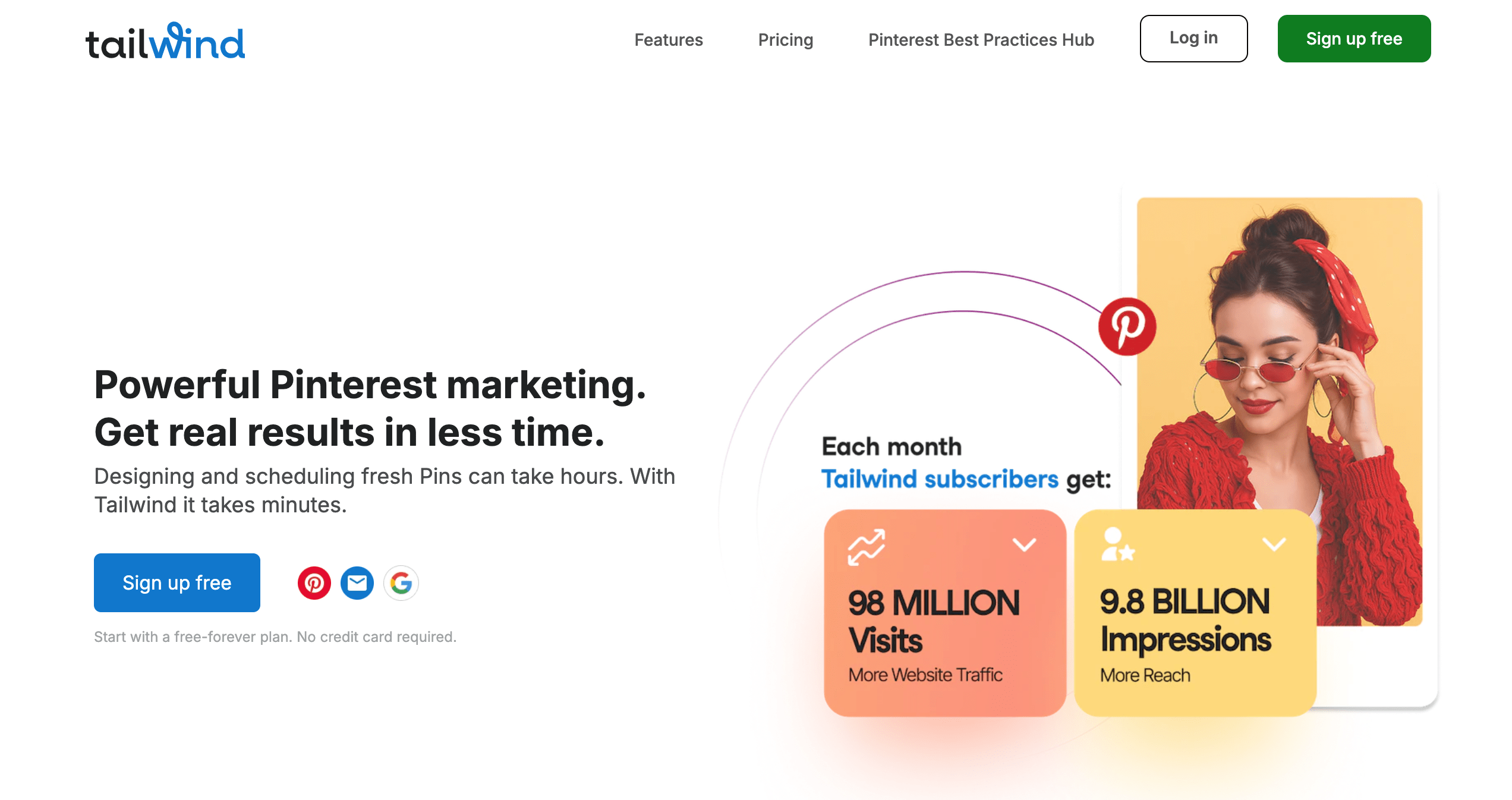
Tailwind began as a Pinterest scheduling tool and has grown into an analytics and content creation platform mainly for Pinterest and Instagram. While it also supports Facebook, its strengths lie in visual content workflows like post scheduling, hashtag research and link-in-bio optimization. Tailwind’s visual dashboards make it easy to track engagement trends and content performance across image-driven channels, helping brands refine their Pinterest and Instagram strategies.
Socialinsider
Socialinsider is an analytics-focused tool that offers AI-driven insights, particularly around content pillars. It can show you which themes or topics perform best on each social network, which is helpful for brands with diverse content categories. Higher-tier plans also include AI-based competitor analysis, allowing you to see how your content pillars stack up against others in your industry. A useful feature is post tagging, which lets you group posts and evaluate how specific campaigns or content types perform without mixing the data together.
The main drawback is cost. Many of Socialinsider’s most valuable features are locked behind higher-priced plans, which may make it less accessible for smaller teams and independent creators.
Google Analytics
Google Analytics isn’t built specifically for social analytics, but it’s essential for understanding how your social channels contribute to website traffic and conversions. Brands can track visitors from each network, analyze how social users behave once they arrive on the site and use UTM parameters to measure individual campaigns, including tracking the effectiveness of paid campaigns from social media. For marketers looking to connect social performance with on-site ROI, GA provides the missing link between engagement and tangible business outcomes.
Social media analytics tools comparison
Which social media analytics tool is the best?
There isn’t one single tool that works perfectly for every organization. The “best” social media analytics platform is the one that fits your goals, the channels you manage, the size of your team, and how deeply you want to dive into your data. What matters most is finding software that genuinely supports your workflow and makes it easier to understand what’s happening across your social presence.
When evaluating analytics platforms, also consider the learning curve – some tools may require more time to master, especially if they offer advanced features or complex dashboards.
When comparing tools, keep a few core criteria in mind:
Depth of insights
You know that feeling when you’re staring at a bunch of numbers wondering “what the hell does this actually mean for my strategy?” We’ve all been there. Start by figuring out exactly which social media metrics and key performance indicators actually matter to your goals – not just the vanity metrics that look pretty. Whether you’re trying to see how you stack up against competitors, decode why your audience loves some posts and ignores others, or just want reports that don’t take three hours to pull together, find a social media analytics tool that gives you the deep-dive analysis you actually need. Because surface-level data is like getting a weather report that just says “it’s outside.”
Usability
Here’s the thing – an analytics platform that requires a PhD to navigate is basically useless. We’ve seen too many teams invest in powerful tools that end up gathering digital dust because nobody wants to click through seventeen menus just to see last week’s engagement. Look for a social media management tool that doesn’t make you want to throw your laptop out the window. Clean interface, intuitive flow, and the ability to hop between social media channels without losing your mind – that’s what you’re after. If your intern can figure it out in five minutes, you’re on the right track.
Reporting quality
Let’s be real – creating custom reports and dashboards shouldn’t feel like solving a Rubik’s cube while blindfolded. Your social media analytics software needs to help you tell a story that actually makes sense to your boss, your client, or whoever’s asking “so… how did we do?” Good data visualizations aren’t just pretty charts – they’re the difference between stakeholders nodding along and stakeholders understanding why your social engagement metrics matter for the bottom line. And please, for the love of all things digital, make sure you can export without wanting to scream.
Room to grow
Today you’re managing three social platforms and 20 posts a week. Next year? Who knows – maybe you’ll be juggling eight platforms with content flying out daily. Choose a platform that won’t leave you scrambling when your social media presence explodes (in a good way). You’ll want something that scales without breaking your brain or your budget, with advanced features like predictive analytics and competitor benchmarking ready when you need them. Because starting over with a new tool when you’ve finally got your groove? Nobody has time for that.
Pricing and support
Look, we get it – budgets are tight and every dollar needs to count. Make sure you’re getting real value for your investment, not just paying for features you’ll never touch. But here’s what really matters: when you’re stuck at 11 PM trying to pull a report for tomorrow’s meeting, you want customer support that actually shows up. Whether it’s setting up automated reports, making sense of complex social media metrics, or just getting your team up to speed, responsive help can be the difference between smooth sailing and late-night panic sessions.
Ultimately, the right social media analytics tool stops being just another piece of software – it becomes your secret weapon for turning guesswork into strategy. When you can analyze data that makes sense, optimize campaigns based on what’s actually working, and deliver insights that make people sit up and pay attention, that’s when your social media strategy stops feeling like throwing spaghetti at the wall and starts feeling like… well, like you know what you’re doing.
Best practices for social media analytics
You know that sinking feeling when you’re staring at your analytics dashboard, wondering if those engagement numbers are actually telling you anything useful? We’ve all been there – drowning in data but somehow still thirsty for real insights. Here’s the thing: to actually get somewhere with social media analytics, you’ve gotta start with the basics that actually matter. Define your KPIs like you’re setting GPS coordinates – engagement rates, reach, conversion metrics – whatever aligns with where your business is actually trying to go. Then dive into those social analytics tools like you mean it, digging into audience demographics and keeping tabs on what your competitors are up to. It’s like having a backstage pass to understand your market position and spot trends before they smack you in the face.
But here’s where it gets real – you can’t just collect data like you’re hoarding Halloween candy. Create those custom reports that actually tell your team and stakeholders something they can do something with. And predictive analytics? That’s your crystal ball for catching shifts in how your audience behaves or which content’s about to tank before it happens. When you focus on insights that actually move the needle and really dig deep into your social analytics, you’re not just throwing content at the wall and hoping it sticks anymore. You’re refining your strategy, maxing out your social presence, and building growth that doesn’t disappear when the algorithm changes its mind. Stay ahead of the game with your analytics approach, and you’ll be ready to jump on opportunities while everyone else is still figuring out what happened.
Future of social media analytics
If you’ve been watching the social media analytics game lately, you’ve probably noticed things are moving fast. AI-powered insights, machine learning that actually makes sense, natural language processing that doesn’t sound like a robot wrote it – it’s all happening at once. And while these platforms keep rolling out shiny new features and your audience keeps changing how they scroll, you’re stuck trying to keep up. The future? It’s all about grabbing these tech advances by the collar and squeezing out insights that’ll actually move the needle on your campaigns.
Here’s the thing – if you’re not investing in the good stuff (we’re talking advanced analytics tools that don’t make you want to bang your head against your desk), you’re basically handing your competitors a head start. We’ve seen it happen: brands that lean into AI-powered insights don’t just keep up with trends – they set them. And in a world where social media isn’t just part of your marketing strategy, it is your marketing strategy, being able to crunch data at scale and find those golden nuggets of actionable insight? That’s what separates the winners from the “what happened?” crowd. The smart brands – the ones already knee-deep in social media analytics – they’re the ones who’ll ride this digital rollercoaster like they own it.
Make your data work for you
No matter which tool you pick, the endgame’s always the same: actually get your data instead of just staring at numbers that might as well be hieroglyphics. Figuring out what makes your content pop is what separates marketers who know their stuff from those still throwing spaghetti at the wall and hoping something sticks.
Hunt for a platform that doesn’t make your brain hurt – one that actually connects the dots between what you post, how people react, and whether you’re winning or just… existing. If you want analytics that make sense, tell you what to do next, and don’t require a PhD to decode, Sotrender gives you the good stuff without all the headache-inducing mess.